Kundan Earrings
Kundan is a setting technique before it is a look. The stone is bedded into gold-coloured metal rather than gripped in claws, so the metal frames every stone and becomes part of the pattern instead of disappearing behind it. That is why a Kundan piece reads as gold work with stones in it, and a claw-set piece reads as stones with metal around them.
Every Kundan earring we sell is on this page, in both shapes it comes in. The jhumka is the bell: a paved top over a domed cup closed with a pearl fringe, and it hangs straight down. The chandbali is the crescent: a moon of stones below a flower, with pearl drops along the lower rim, and it sits wider than it is long.
Which one suits you is mostly about the neckline. A jhumka drops into the space beside the jaw and works with a high blouse or a closed collar. A chandbali spreads outward and wants a bare neck or a very simple chain to spread into.
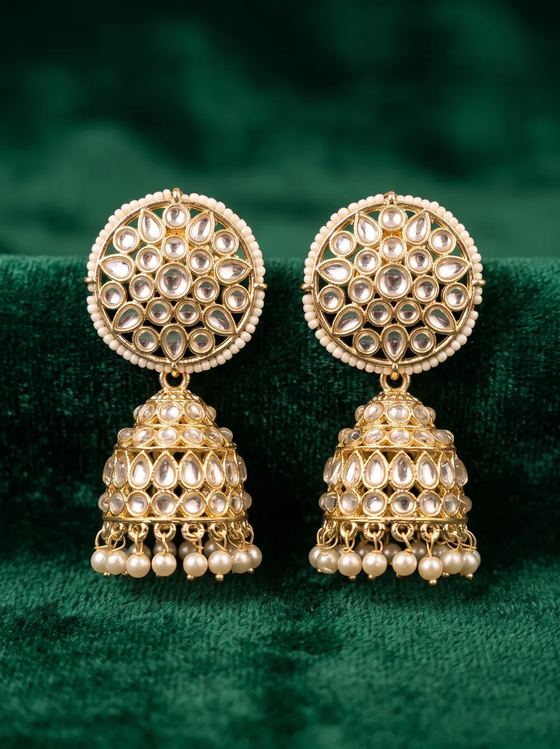
Round Kundan Jhumka Earrings with Pearl Border
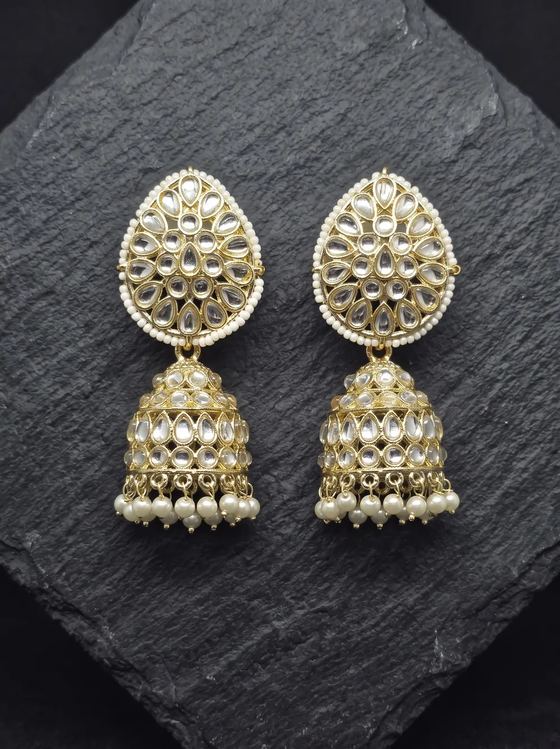
Teardrop Kundan Jhumka Earrings with Pearl Border
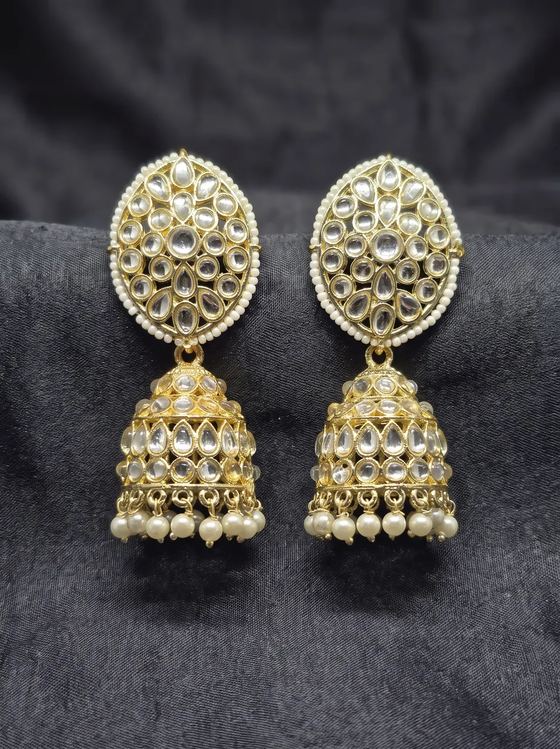
Oval Kundan Jhumka Earrings with Pearl Border
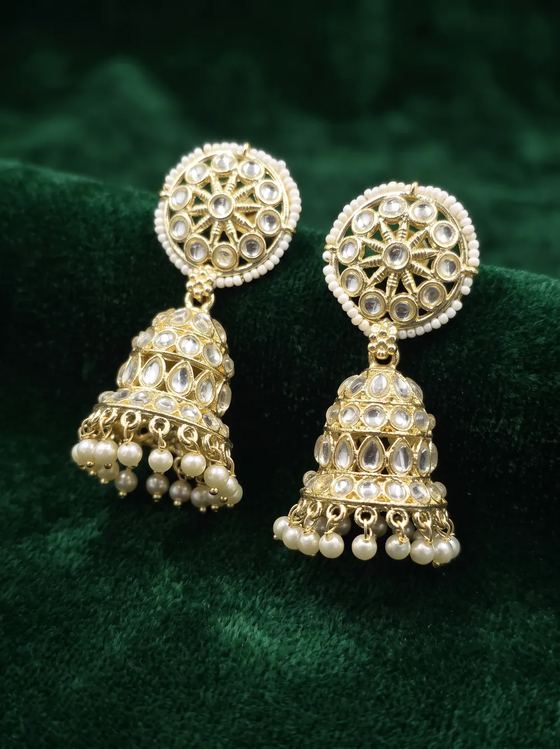
Chakra Kundan Jhumka Earrings with Pearl Border
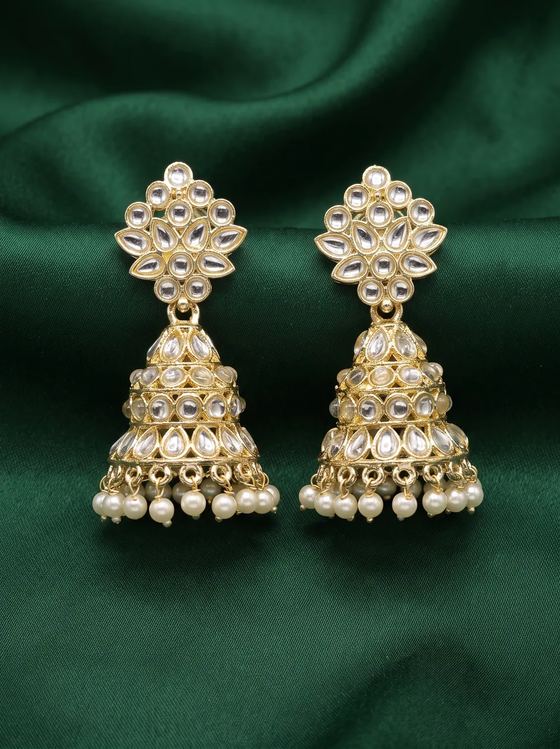
Floral Kundan Jhumka Earrings
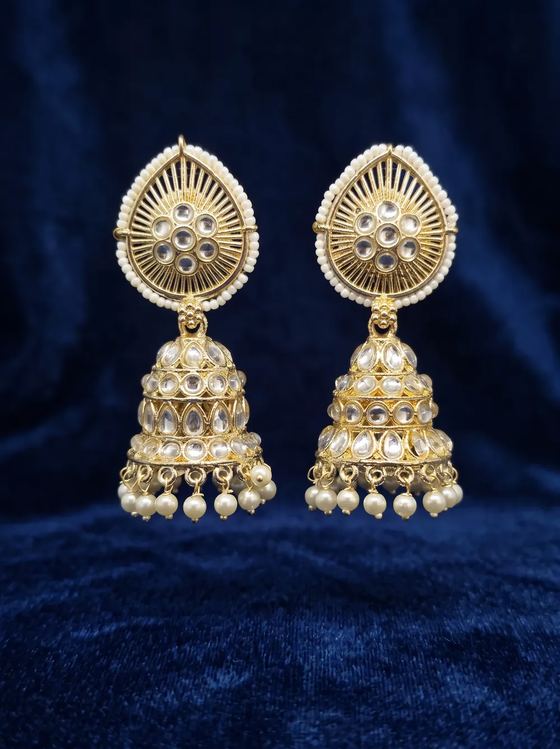
Sunburst Kundan Jhumka Earrings with Pearl Border
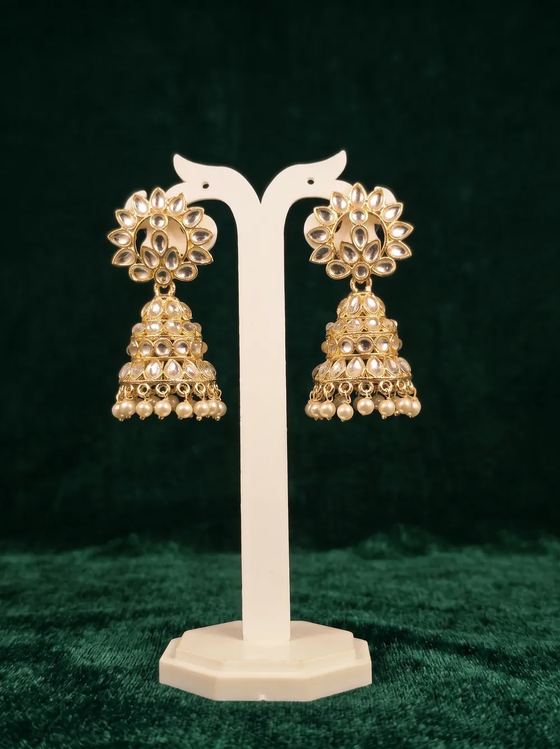
Lotus Kundan Jhumka Earrings with Pearl Drops
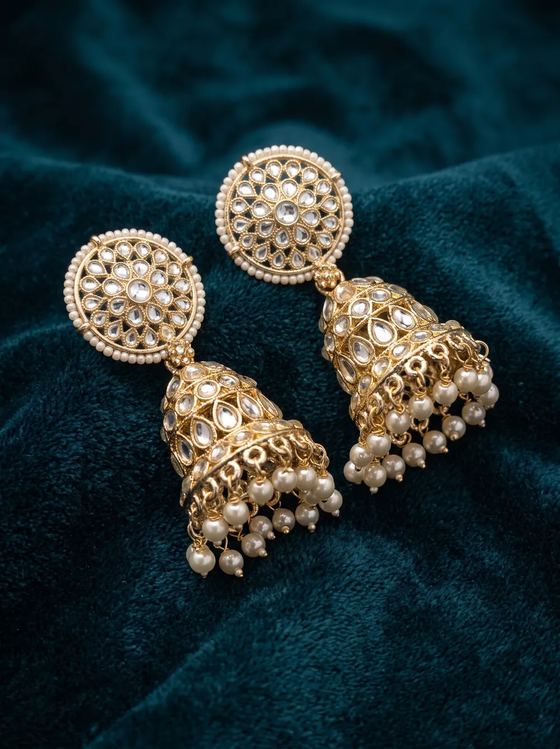
Grand Round Kundan Jhumka Earrings with Pearl Fringe
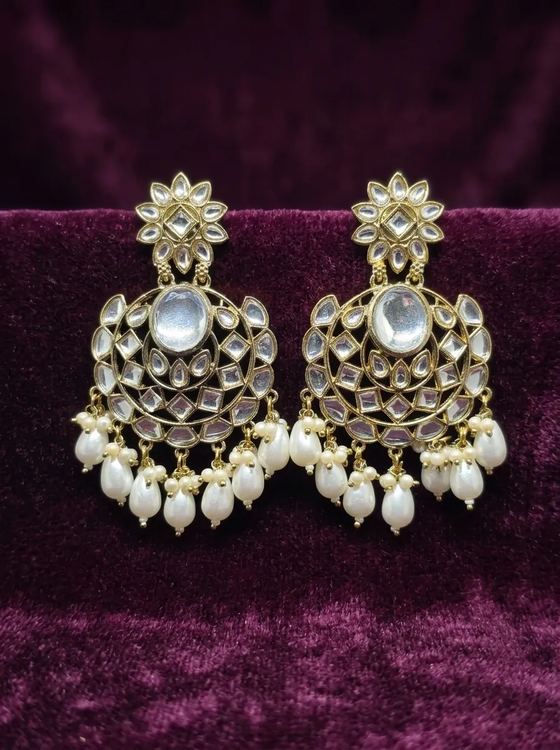
Floral Kundan Chandbali Earrings with Pearl Drops
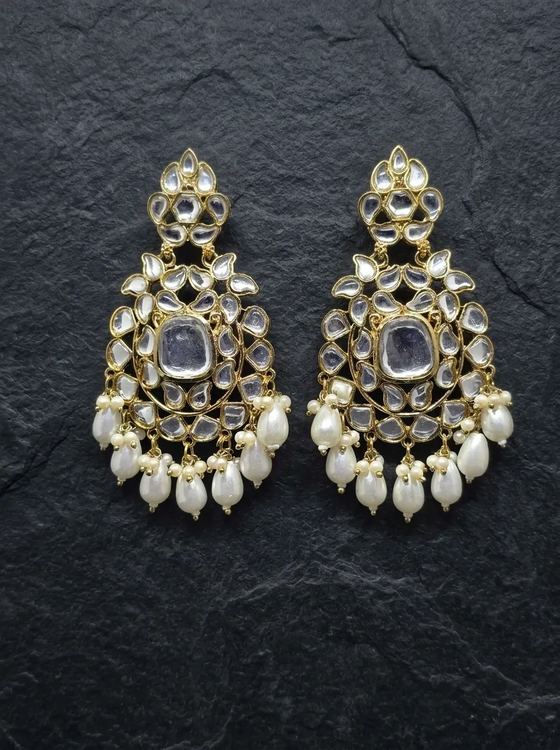
Polki-Style Kundan Teardrop Chandbali Earrings
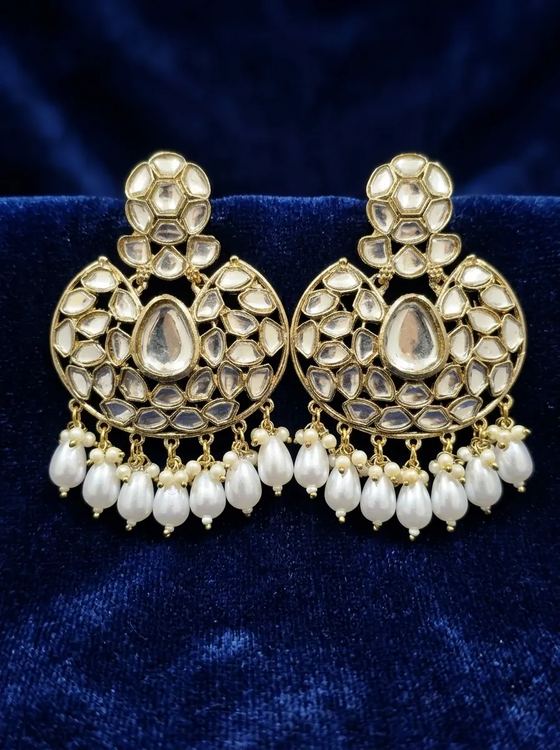
Wide Kundan Chandbali Earrings with Pear-Cut Centre
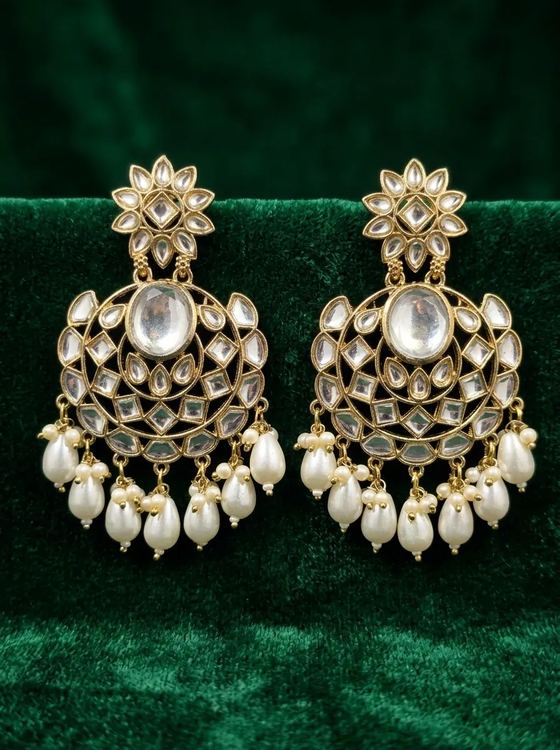
Round Kundan Chandbali Earrings with Pearl Fringe
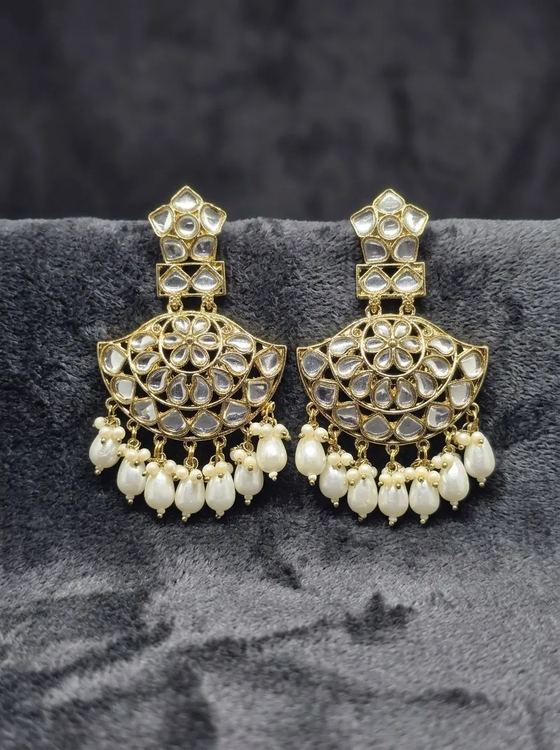
Kundan Fan Chandbali Earrings with Pearl Drops
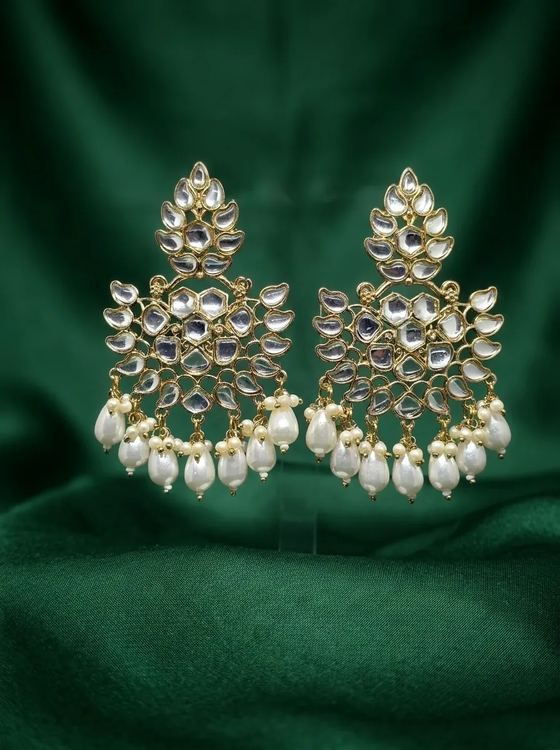
Kundan Leaf Chandbali Earrings with Pearl Drops
Kundan earrings for a wedding, at wedding scale
The pairs on this page were sized for a function, not for a desk. The largest jhumkas and the wide chandbalis are meant to be the only jewellery above the neck and to hold their shape in a photograph taken from across a hall. And because they are imitation, you can own a different pair for the mehendi, the sangeet and the reception.
Polki-look earrings
Polki is uncut natural diamond set the same way; Kundan uses cut glass or crystal in the identical bed of metal. At imitation prices the technique is always Kundan, and any piece sold as polki at a few hundred rupees is Kundan too. The Polki Kundan Teardrop Chandbali here is cut and set to read as an uncut stone. There is a full comparison at /blogs/kundan-vs-polki.
Stone earrings with pearl drops
Almost every pair here finishes on pearls - a seed-pearl border around a jhumka top, or a row of drops along the rim of a chandbali. They are shell and resin pearls, matched for size and lustre, and they are what stops a fully paved gold top from reading flat under indoor light.
Questions about Kundan Earrings
Jhumka or chandbali - which should I buy first?
A jhumka, if it is your only pair. It works with a saree, a lehenga and a plain kurta, and it does not need a bare neck. Buy the chandbali second, for the evening where you are wearing no necklace at all.
What is the difference between Kundan and Polki?
Both bed the stone into gold-coloured metal rather than holding it in claws. Polki uses uncut natural diamond; Kundan uses glass or crystal cut to the same shape. On imitation jewellery the technique is Kundan.
Do the stones fall out?
Each stone is hand-set into the casting, which is slow work and the reason the fronts sit level and catch light together. Treat them as occasion pieces - off before a shower, stored dry - and the settings outlast the plating.
Will these irritate sensitive ears?
The gold plating is what sits against your skin rather than the metal underneath. If your ears are sensitive, wear a new pair for a short first outing before a full-day function.
How long does delivery take, and what does it cost?
Shipping is free across India. Orders are dispatched from Mumbai within 2-4 business days, then take 2-4 days to arrive in Mumbai, 3-5 days across Maharashtra and 5-8 days to the rest of India, with a tracking link sent on WhatsApp the moment the parcel is picked up.