A Stone Came Loose. What Now?
A stone falling out of a necklace or jhumka is one of the most common problems with imitation jewellery, and one of the easiest to fix - if you keep the stone. Here is why it happens, what you can do at home, and when it is better to contact the seller.
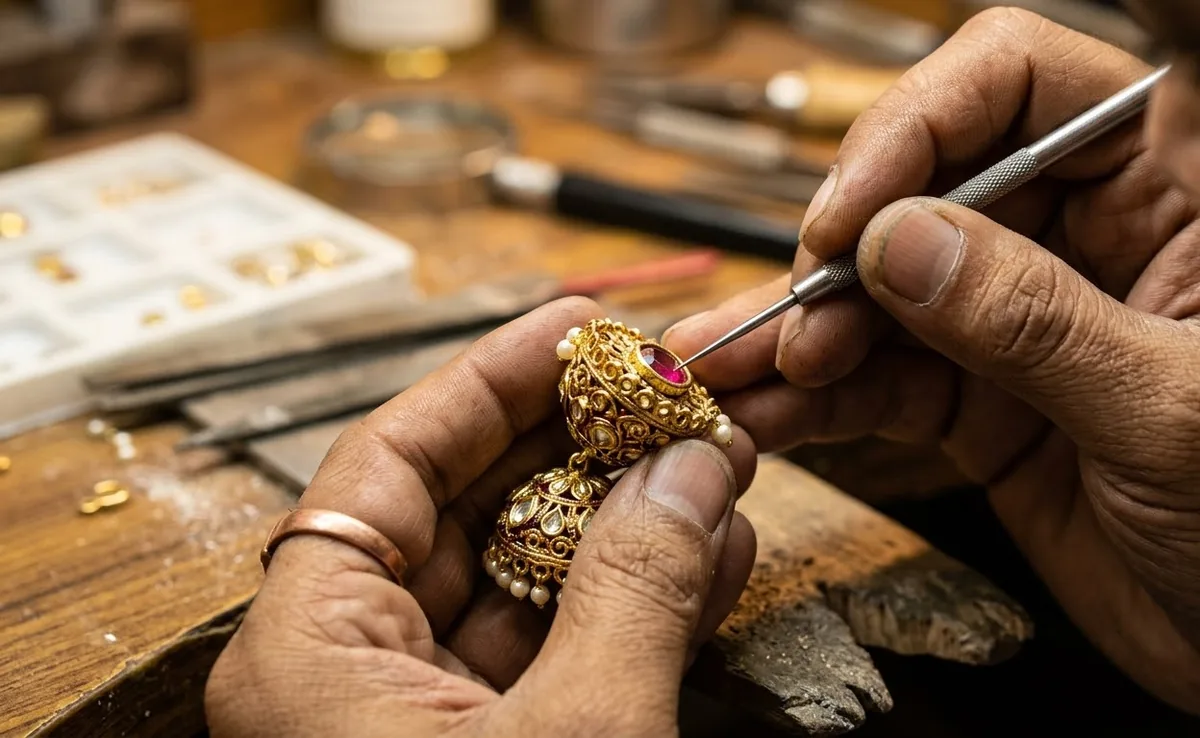
Why stones come loose
In most imitation jewellery, stones are hand-set with a jewellery adhesive into small cups or frames. They come loose when:
- The piece is knocked against something hard.
- Water, soap or perfume reaches the adhesive and weakens it.
- Heat - a hair dryer, a hot car, direct sun - softens the adhesive.
- Pieces are stored loose and rub against each other.
What you can safely do at home
- Find and keep the stone - put it in a small zip bag straight away.
- Clean the empty setting gently with a dry cotton bud to remove old adhesive dust.
- Use a jewellery or craft adhesive meant for metal and glass - a tiny amount, applied with a toothpick into the setting, not on the stone's face.
- Press the stone in with tweezers, facing the right way, and wipe off any excess immediately.
- Leave it flat to set for the time the adhesive instructions say - usually several hours - before wearing.
Avoid instant super glue on Kundan: it can fog the foil and the stone.
When to stop and send it back
- The piece is new and arrived damaged - report it within the return window before trying a repair. Our policy: report within 3 days of delivery with an unboxing video for transit damage; see shipping and returns.
- Several stones are loose - a sign of a wider problem.
- The setting itself is bent or broken.
- The stone is lost - a matching replacement is usually needed from the seller.
Read is a loose stone a manufacturing defect and how to keep Kundan from going dull.
How to prevent stones falling out
- Avoid knocks - take rings and bangles off for housework.
- Avoid water - moisture weakens adhesive and settings.
- Avoid heat - do not leave jewellery in a hot car or in direct sun.
- Store pieces separately so stones do not catch on each other.
- Check before wearing - gently press each stone; a moving stone should be fixed before it falls.
How to replace a missing stone
If a stone falls out and you have it:
- Keep it in a small labelled envelope.
- Contact the seller if it is within the defect window. We need a report within 3 days of delivery for manufacturing defects.
- For older pieces, a local jewellery repair shop can reset it.
If you do not have the stone, a repair shop can often match a glass or CZ stone of the same size and colour.
Why stones come loose in artificial jewellery
- Adhesive weakening over time with heat and moisture.
- Prongs bending from a knock.
- Settings stretching with repeated wear.
- Manufacturing faults - which usually show up in the first few wears.
When is it a defect?
A stone that falls out on first wear is a defect. One that loosens after months of regular wear is wear and tear. Read reading a jewellery return policy.
Kundan stones vs AD stones
Kundan stones are held by foil and adhesive; AD stones are usually held by prongs or channels. Loose Kundan stones need an adhesive fix; loose AD stones usually need the prongs tightened. Both are best done by a repair shop.
A loose stone during an event
Carry a small pouch; if a stone comes out, put it in the pouch and keep the piece away from knocks until it can be repaired.
Hinglish mein padhein: Jhumka kaise pahne aur thik kare.
Frequently asked questions
Can a fallen stone be reglued?
Yes - with a jewellery adhesive, a toothpick and patience. Keep the original stone.
Is a loose stone a manufacturing defect?
If it falls out on arrival or with normal careful wear shortly after, report it to the seller. If it follows a knock or water, it is wear.