The Rani Haar: Long, Heavy and Worth Understanding
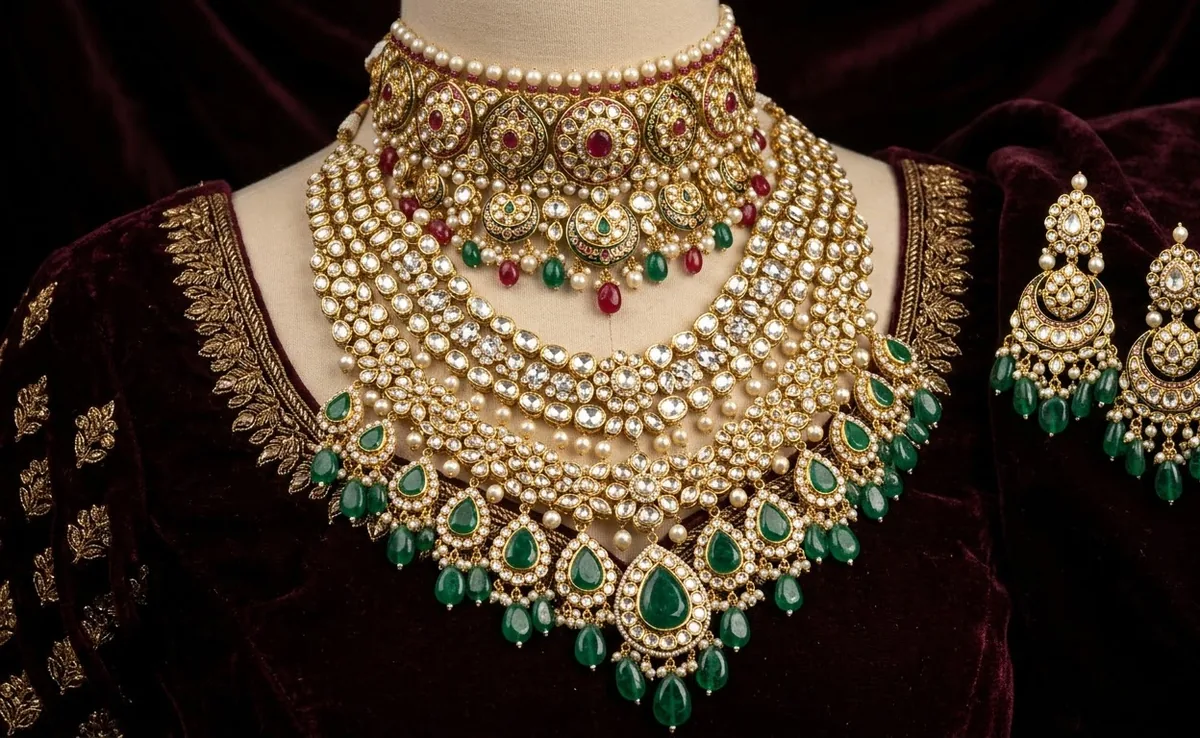
A Rani Haar - literally "queen's necklace" - is a long, statement necklace that falls below the bust, often in several layers or with a large pendant. It is the showpiece of many bridal and festive looks, from Rajasthani and Hyderabadi bridal sets to South Indian long harams. Here is where the name comes from and how to wear one well.
Where the name comes from
"Rani" means queen, and the name reflects the long, layered necklaces associated with royal and bridal dress. Today the name is used broadly for any long, grand necklace - multi-strand pearl haars, long Kundan necklaces, and South Indian long harams alike. Our long haram sets are named Rani Haar sets for exactly this reason.
Layers and how they should hang
A multi-layer Rani Haar should hang so that:
- Each strand is visible - the strands step down, not lie on top of one another.
- The pendant sits centred and does not flip.
- The back dori or chain is adjusted so the lowest layer ends just below the bust.
A single-strand Rani Haar with a big pendant - common in South Indian designs - should end at the same place.
With a lehenga versus a saree
- Lehenga: the open neckline gives the Rani Haar room to shine. Pair it with a choker, or wear it alone with statement earrings.
- Saree: it works best with a deep round or V-neck blouse. With a heavy pallu over the shoulder, let the haar sit on the side without the pallu, or wear the pallu open.
What is a rani haar?
A rani haar ("queen's necklace") is a long, heavy necklace, usually with multiple layers or strands, that falls to the chest or waist. It is a signature piece of North Indian, Rajasthani and Marathi bridal jewellery, worn with a choker for the full bridal neckline.
Rani haar designs
- Kundan rani haar - stones and pearls in several layers.
- Polki-style rani haar - soft uncut-look stones.
- Temple rani haar - goddess and peacock motifs.
- Pearl rani haar - multiple pearl strands with a pendant.
- Antique gold rani haar - an old-gold look.
How long is a rani haar?
Usually 20 to 30 inches, depending on the design and how many layers it has. Choose the length based on your outfit: longer with a lehenga, slightly shorter with a saree so it sits above the pleats.
Rani haar with a choker
The rani haar is almost always paired with a choker for the bride. The choker fills the neck; the rani haar fills the chest. Read choker vs long haram.
Rani haar for the bride's family
Mothers and elder relatives often wear a rani haar alone, without a choker, for a grand but comfortable look.
Rani haar with a lehenga vs a saree
- Lehenga: the rani haar can fall long, over the choli, with a choker above it.
- Saree: keep it long enough to show below the pallu but not so long that it catches on the pleats.
Rani haar for Maharashtrian brides
Maharashtrian brides often wear a long haar with a thushi (a choker of gold beads) and a Kolhapuri saaj, with a Paithani saree. Read Maharashtrian jewellery.
How heavy is a rani haar?
Real gold rani haars are very heavy. Artificial rani haars are much lighter and more comfortable for a long wedding day, while giving the same look in photos.
Caring for a rani haar
Store it flat, with each layer untangled, in a long box or wide pouch.
Rani haar on a budget
A single artificial rani haar paired with a simple choker gives the full bridal neckline for a fraction of the cost of gold. Read bridal jewellery under ₹5000.
Frequently asked questions
How long is a Rani Haar?
Usually 26 to 32 inches, ending just below the bust.
Can a Rani Haar be worn alone?
Yes - with statement earrings, it is a complete look for a festival or reception.
Browse our long haram Rani Haar sets, each with matching jhumkas.