South Indian temple jewellery: jhumkas, kasulaperu and kemp
Temple jewellery takes its name from the motifs carved on temple walls - gods, peacocks, lotus and gopuram shapes - pressed into gold-tone metal. South Indian brides layer it over kanjeevaram silk, but the pieces work for any festive occasion once you know which shapes to pick.
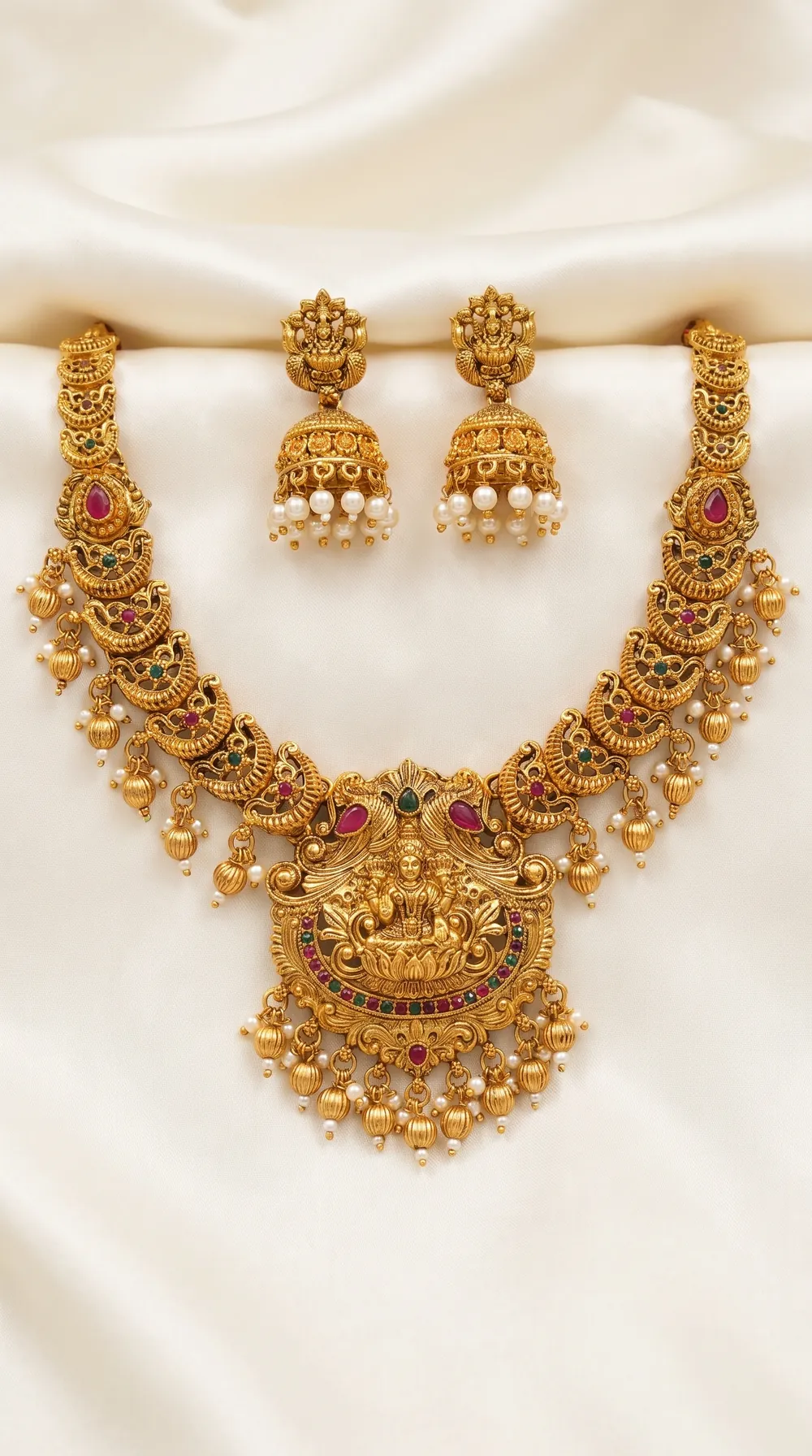
The temple jhumka is the easiest entry point. Domes of embossed gold with a peacock or lotus motif and a small bell-shaped drop catch the light against a deep red or green silk saree. They suit both a full bridal look and a simple puja outfit.
Kasulaperu and the coin necklace
Kasulaperu is the classic South Indian coin necklace - linked gold coins that sit flat across the collarbone. A kasulaperu-style chain fills the neckline without the weight of a solid haaram, which makes it the practical choice for long ceremonies. Gold-plated versions stay light and tarnish-resistant with basic care.
Kemp stones and the red accent
Kemp, the deep red stone set in gold, is the traditional South Indian accent. A kemp-studded piece adds the bridal red without relying on heavy rubies. If the saree border is red or gold, a kemp or stone-set piece ties the whole outfit together; if the border is plain, keep the jewellery to solid gold tones.
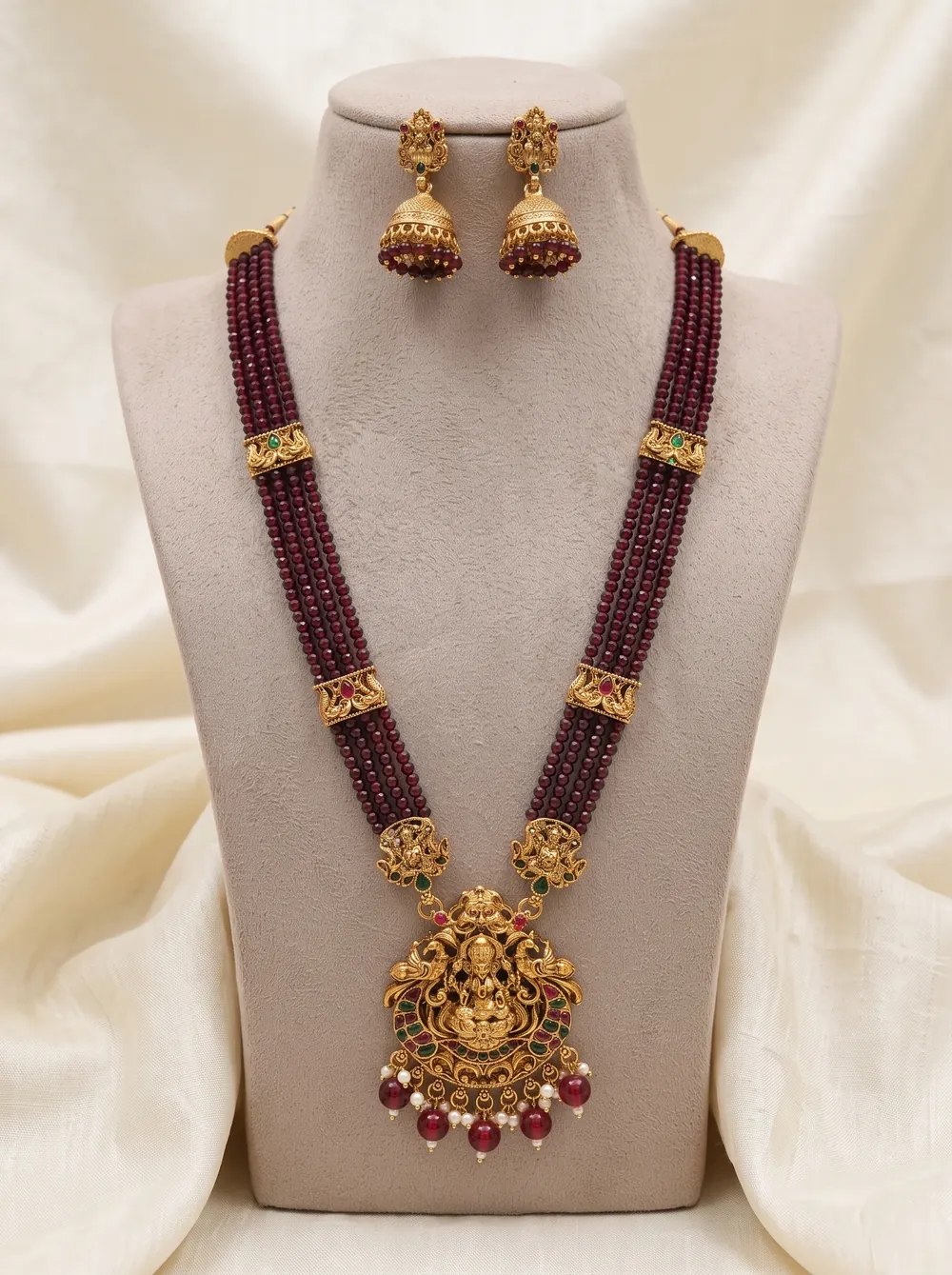
Shop our temple jhumka earrings and short necklace styles for South Indian festive wear, or WhatsApp us your saree colour for a match.
What is South Indian temple jewellery?
Temple jewellery is gold jewellery carrying motifs from temple architecture and iconography — deities such as Lakshmi, peacocks, lotuses and gopuram shapes. It began as ornament for temple deities and the dancers who performed there, and later became the defining bridal style across Tamil Nadu, Karnataka, Andhra Pradesh and Kerala.

What is a kasulaperu?
A kasulaperu is a necklace of gold coins, most often embossed with Goddess Lakshmi, strung close together. It is among the most recognisable South Indian bridal pieces and one of the most frequently passed down within families. It is usually worn longer, below a choker.
What are kemp stones?
Kemp is a deep red — sometimes green — stone traditionally set into South Indian temple jewellery. Historically these were rubies and other red stones; today kemp usually refers to the red stone look itself, set in gold-toned metal. Kemp adds the bridal red to a set without relying on a red saree border to carry it.
What is a vanki and an oddiyanam?
A vanki is an armlet worn on the upper arm, often in a V shape. An oddiyanam is a gold waist belt worn over the saree. Both complete the full bridal set and are the two pieces most often added last — worth trying on together with the saree, because the oddiyanam changes how the whole drape sits.
How do you choose temple jewellery for a Kanjeevaram saree?
Match the jewellery to the zari, not to the body colour of the silk. A Kanjeevaram with a gold zari border pairs with yellow gold; a saree with an antique or copper zari border suits matte antique finishes. Keep the necklace clear of the border so the two do not meet at the shoulder and blur together.
Shop this look
Keep reading
- Temple vs Kundan: which suits your wedding
- Choker, collar or haram: the length guide
- Which jewellery suits each saree neckline
- How to style temple jewellery beyond the wedding
- Kundan vs Polki: what brides should actually compare