Earrings That Do Not Hurt: What to Look For
When earrings hurt, the cause is usually one of three things: a post that is too thick or rough, weight that tilts the earring forward, or a back that squeezes the lobe. All three can be checked before you buy. Here is what to look for.
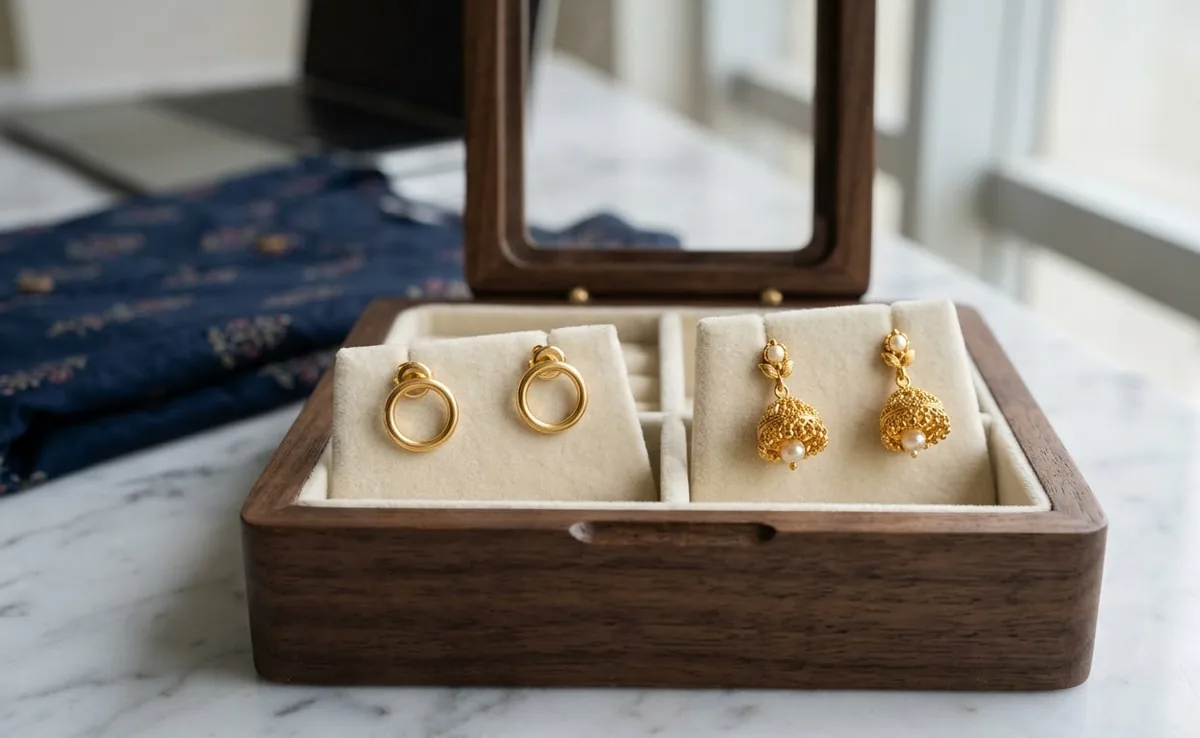
Post thickness and finish
- Thickness: standard earring posts are thin; a noticeably thicker post stretches a normal piercing and aches. If a pair feels tight going in, do not force it.
- Finish: the post should be smooth, with no rough edges or burrs where it joins the earring.
- Length: too short and the back squeezes the lobe; too long and it pokes.
If ears feel sore after wearing any imitation jewellery, give them a break and clean the post before wearing again. Reactions to metals differ from person to person - if you know you react to certain metals, ask the seller what a piece is made of before buying. Our pieces are a Zamak (zinc alloy) base, gold-plated.
Weight distribution versus total weight
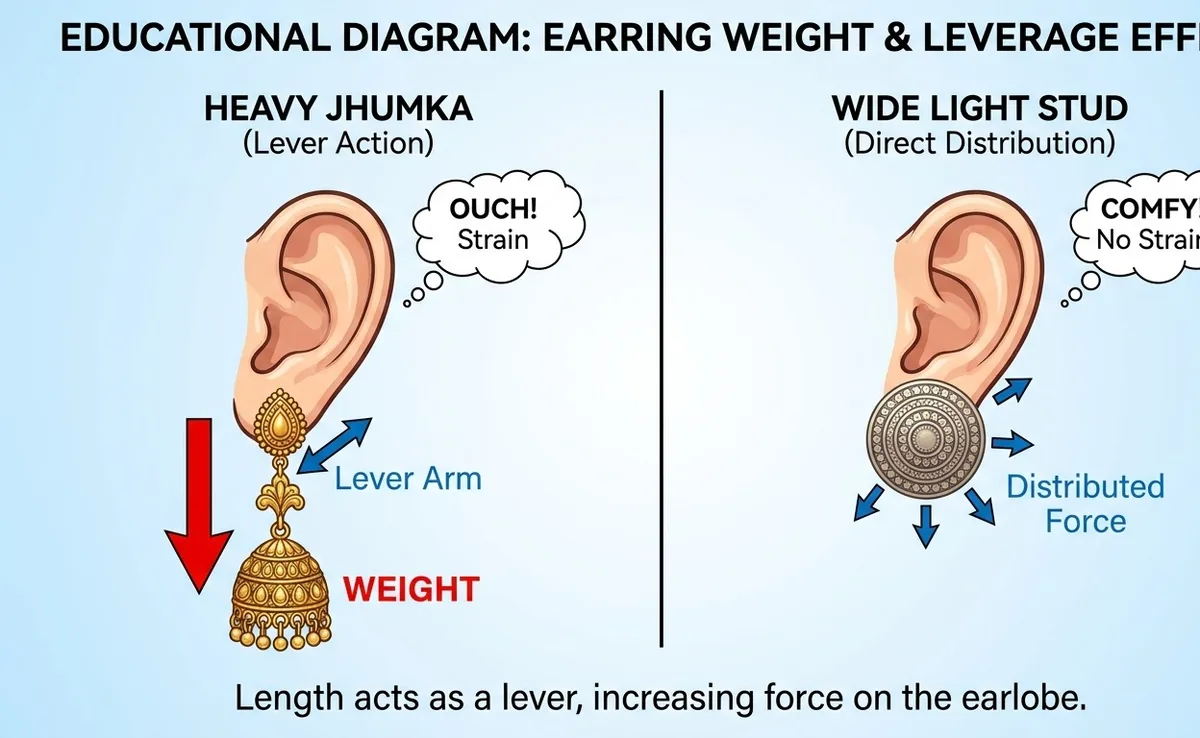
Two earrings of the same weight can feel completely different. What hurts is leverage: if most of the weight hangs far below and in front of the lobe, the earring tips forward and drags on the piercing. A heavier earring that hangs straight can be more comfortable than a lighter one that tilts. Read why earring weight is not the whole story.
Backs: butterfly, screw and silicone
- Butterfly (push) backs: common and easy, but can loosen and let the earring tilt.
- Screw backs: hold firmly; good for heavy earrings and dancing.
- Silicone or large disc backs: spread pressure on the back of the lobe and stop tilting - the most comfortable for long wear.
For long functions, see lightweight earrings for a six-hour function, and for dark marks on the ear, why earrings turn your ears black.
Why do earrings hurt?
- Weight pulling on the lobe.
- Thick or rough posts that rub the piercing.
- Tight backs that press into the skin.
- Reactions to metal in some people.
- Sleeping in earrings, which presses the back into the skin.
Earrings that don't hurt when you sleep
Most jewellery is best removed before sleep. If you do keep earrings in, flat-back studs or small hoops with no protruding back are the most comfortable. Remove anything with a large back, dangling parts or sharp edges.
Earrings that don't hurt the back of your ear
The back of the ear hurts when butterfly backs press too tightly or the post is too long. Try:
- Silicone or disc backs - softer and flatter.
- Screw backs - adjustable, so you can set a comfortable position.
- Slightly looser positioning - leave a small gap between the back and the lobe.
Clip-on earrings for kids and unpierced ears
Clip-ons are a good option for children, for dance performances and for unpierced ears. Choose clips with a soft pad and wear them for short periods; clips pinch if worn too long.
If your ears react
If an earring causes redness, itching or swelling, take it out and let the ear rest. Some people react to certain metals. Wear a new pair briefly first. Read how to stop earrings turning your ears black.
Choosing earrings for long days
- Under about 5 g per earring for all-day wear.
- Smooth, rounded posts.
- Soft or flat backs.
- Short drops that do not swing much.
Earrings for new piercings
New piercings need time to heal. Keep the starter studs in as advised by the person who pierced your ears, and avoid heavy or dangling earrings until the piercing has fully healed.
Frequently asked questions
Why do my earlobes hurt after two hours?
Usually weight tilting the earring forward, a back pressed too tight, or a thick post. Try larger silicone backs or a lighter pair.
Are screw backs better than push backs?
For heavy earrings and long events, yes - they hold the earring upright. Push backs are fine for light daily pairs.
Browse jhumkas.