Gujarati Bridal Jewellery: What the Look Actually Needs
Gujarati bridal jewellery is layered, bright and generous: a choker and a long rani haar at the neck, a maang tikka, a nath, stacked bangles around the red-and-white chuda, a waist chain and anklets. It is built to sit on a white-and-red panetar or a red gharchola saree, and it is worn for hours through the pithi, the mandap and the vidaai. This guide covers what a Gujarati bride is expected to wear, how to keep it comfortable, and how to build the look in imitation jewellery without it looking thin.
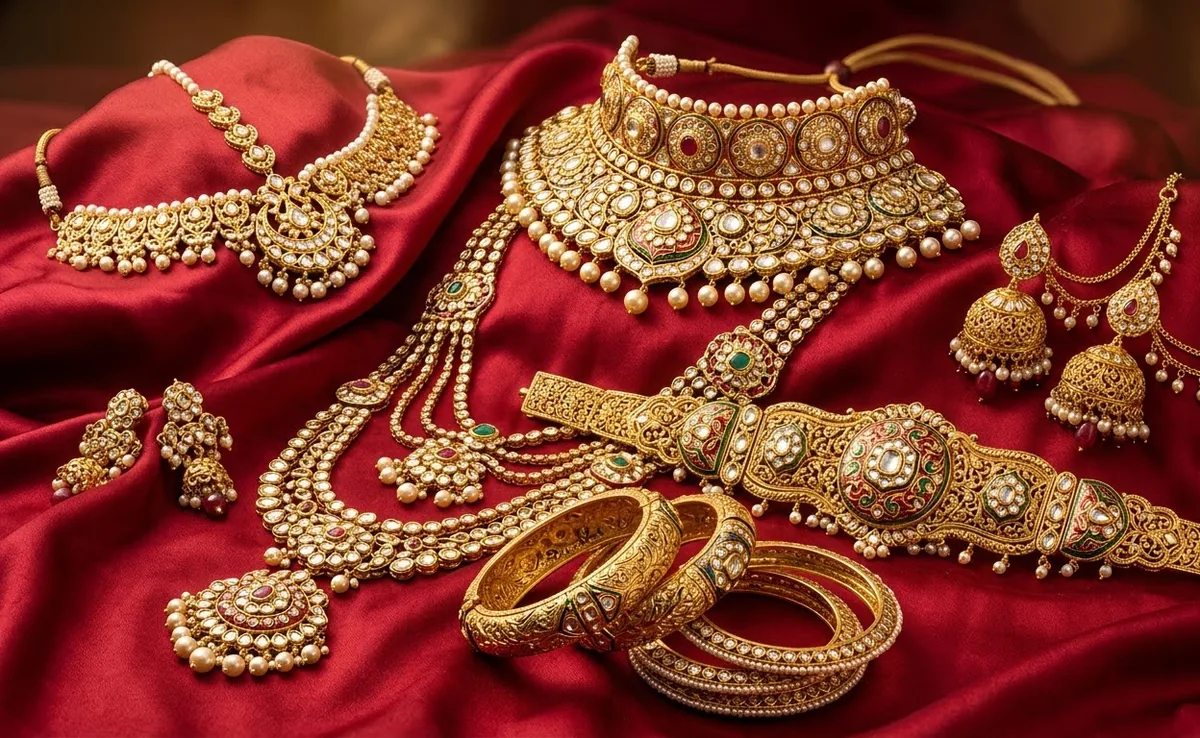
The pieces a Gujarati bride is expected to wear
At the neck: most Gujarati brides layer two necklaces - a close choker and a long haar that falls towards the waist. A traditional hansdi (a rigid collar) is still worn in some families; others prefer a Kundan-style or antique gold-plated set.
On the head and face: a maang tikka along the parting, and a nath (nose ring) with a chain looped to the hair. Heavy jhumkas or chandbalis complete the face.
On the arms: the chuda - the ivory-white and red bangle set gifted by the bride's maternal uncle as part of the mameru - is the centrepiece. Gold-toned bangles are stacked on either side of it, and a bajuband sits on the upper arm.
At the waist and feet: a kandoro (waist chain) and heavy payal anklets.
Not every family uses every piece. Ask the elders early which ones are expected - the chuda and the nath are the two that are rarely optional.
Where the weight sits, and why it matters by hour four
A Gujarati wedding day is long, and the jewellery is heavy in three places: the ears, the neck and the head. By the fourth hour the pain always comes from the same spots.
- Ears: choose jhumkas with an ear chain (sahara) that takes some weight into the hair. Read our note on earrings for long events.
- Neck: layer one heavy piece and one light one, never two heavy ones. A choker plus a long haram with bead drops is lighter than it looks.
- Head: pin the maang tikka at two points, not one, so it does not drag the parting.
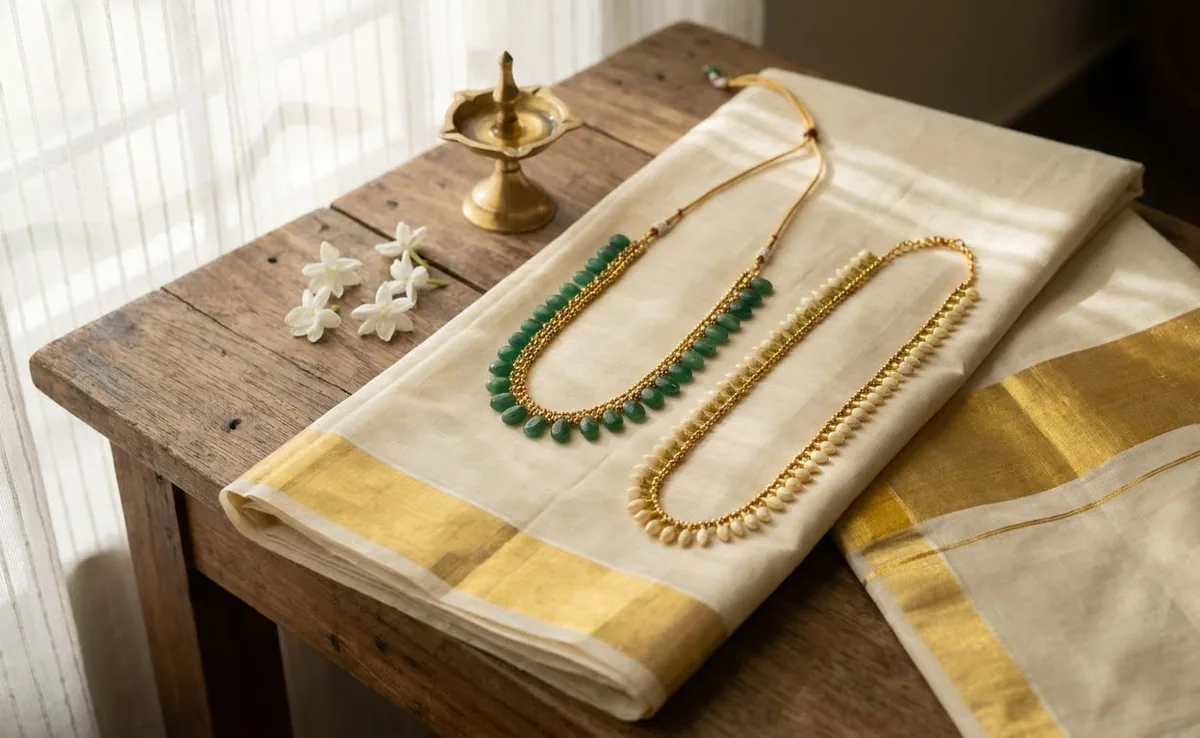
Doing it in imitation without it looking thin
The trick is volume in the right places. A single thin chain on a heavily embroidered panetar disappears in photographs. Instead:
- Go long at the neck. A long haram or Rani Haar set carries the look from across the room. Our crystal bead long harams come with matching jhumkas, which saves buying earrings separately.
- Keep one finish. All antique gold-plated, or all bright gold-tone - mixing the two looks accidental.
- Match the bead colour to the saree. Maroon or green beads sit naturally against red and white.
- Save on the pieces nobody sees. Anklets and a waist chain can be simple; the neck and ears carry the photographs.
For the full checklist of what to wear at each function, see our bridal jewellery checklist, and for how the styles compare, popular bridal jewellery styles for Indian weddings.
Frequently asked questions
What is the difference between a Gujarati and a Rajasthani bridal set?
Both are layered and colourful, but a Rajasthani bride wears the round rakhdi or borla on the forehead and often an aad choker, while a Gujarati bride's signature is the chuda and the long haar over a panetar. See Rajasthani bridal jewellery, piece by piece.
How many pieces does a full Gujarati bridal set have?
Usually eight to ten: choker, long haar, maang tikka, nath, earrings, chuda with bangles, bajuband, kandoro and anklets. Many brides skip the bajuband and kandoro for the reception.
Can I wear imitation jewellery for my Gujarati wedding?
Yes. Many brides keep family gold for the mandap and wear imitation for the pithi, sangeet and reception. Our pieces are a Zamak base, antique gold-plated, with hand-set stones - sold as imitation jewellery.
Browse South Indian wedding jewellery sets and Kundan jhumka earrings for pieces in stock today.