Rajasthani Bridal Jewellery, Piece by Piece
Rajasthani bridal jewellery is the most recognisable bridal look in India: a round rakhdi at the forehead, an aad or timaniya choker at the throat, layered necklaces, bajuband on the arms, hathphool on the hands and heavy payal at the ankles - all in Kundan work with meenakari colour on the back. Here is what each piece is and how to build the look in imitation.
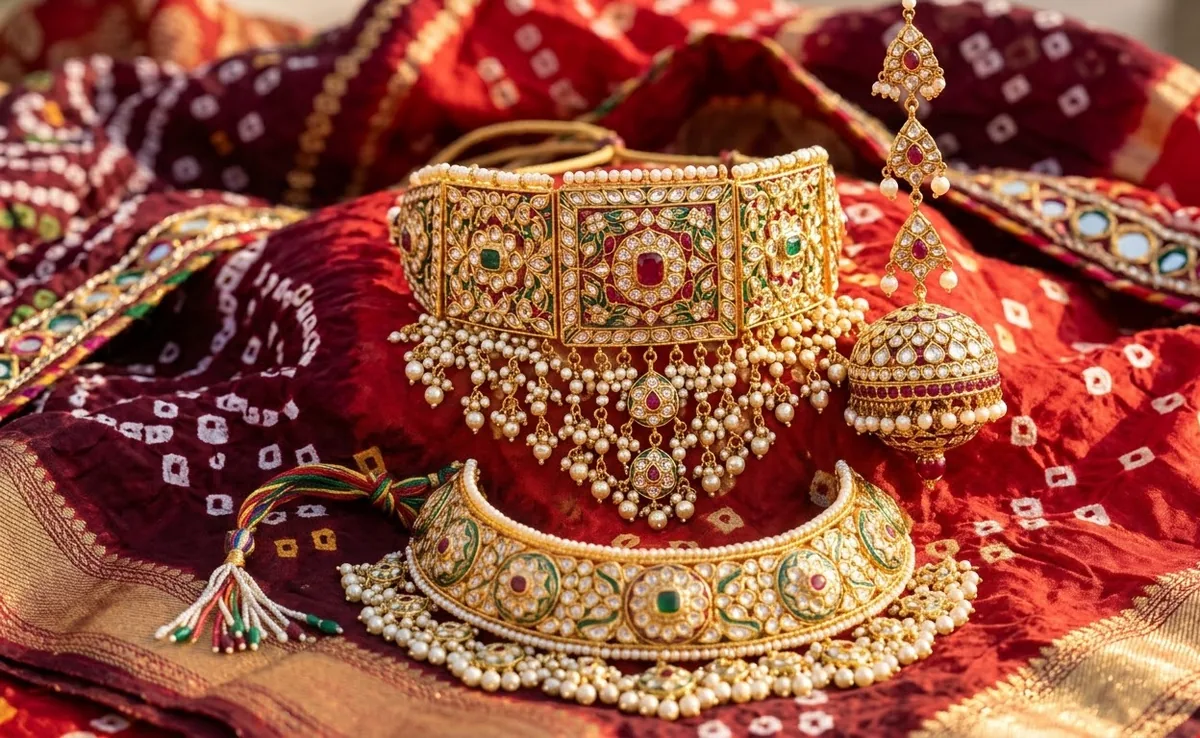
Rakhdi, bajuband, borla: what each one is
- Rakhdi - the round, domed forehead ornament that sits at the top of the parting. It is the one piece that instantly says "Rajasthani bride".
- Borla - the Marwari name for the same round forehead ornament; families use the two words interchangeably, and the shape can vary from a flat disc to a deep bell.
- Aad - a wide, flat choker that sits close to the throat, traditionally heavy with Kundan stones and pearl drops.
- Timaniya - a Rajput choker of stacked panels, often worn together with a longer necklace.
- Bajuband - an armlet on the upper arm, tied with a thread.
- Hathphool - a bracelet joined by chains to rings on the fingers.
- Nath - a large nose ring, usually with a pearl chain looped to the hair.
- Payal - broad anklets, often with small bells.
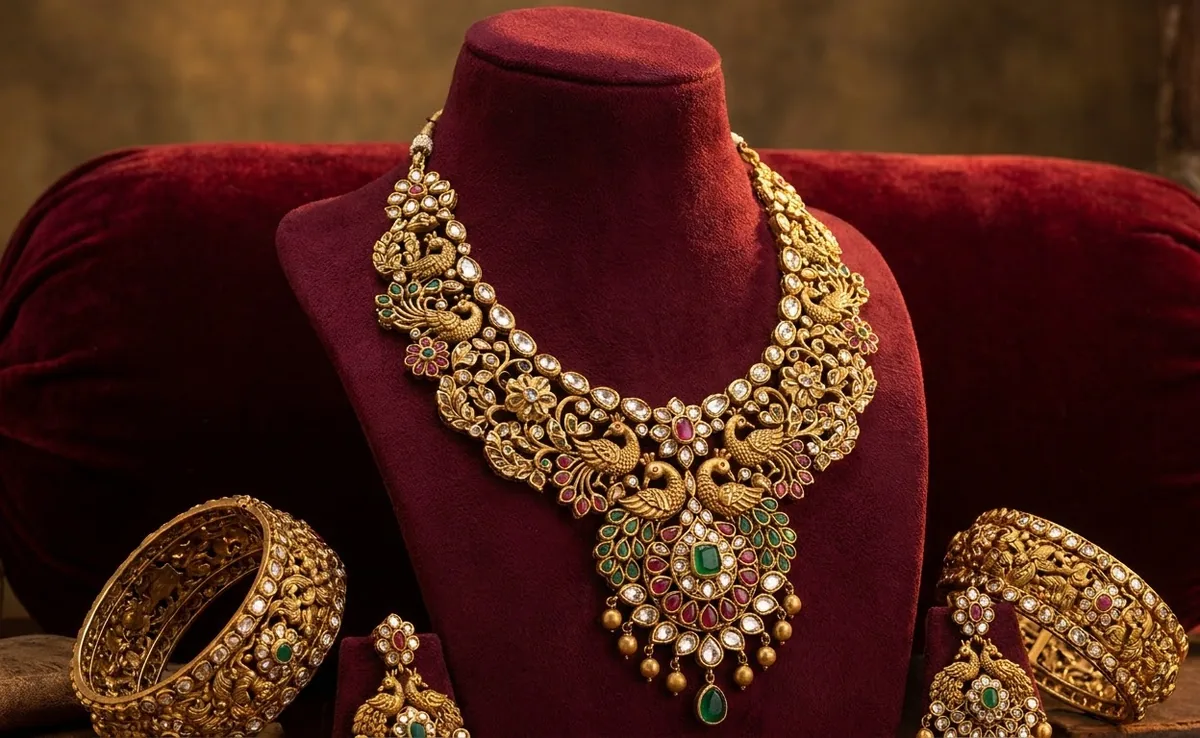
The colour story - Kundan, meena and uncut stones
Rajasthan is the home of Kundan setting (stones held in a gold foil frame) and of meenakari, the enamel work in red, green and white on the back of the piece. Polki - uncut natural diamonds - is the most precious version of the same look. In imitation jewellery you will see Kundan-style and Polki-style pieces: glass or synthetic stones set to give the same flat glow or uneven sparkle.
The colours follow the outfit. A red poshak or lehenga takes green and white; a pastel lehenga takes pearls and white Kundan. Read more in what is Kundan jewellery and meenakari explained.
Buying the look in imitation
- Choose the rakhdi first. It sets the scale for everything else. A small rakhdi with a heavy aad looks unbalanced.
- Layer at the neck. An aad or choker plus one long necklace. Our Kundan chandbali earrings and Kundan jhumkas pair with both.
- Check the back. In good imitation Kundan the back is finished, not raw metal - look at the product photos from behind.
- Keep the weight honest. A full Rajasthani set is heavy; buy the ear pieces with a sahara chain.
For comparisons with other regional looks, see South Indian vs North Indian bridal jewellery and Gujarati bridal jewellery.
Rajasthani bridal jewellery names
- Borla / rakhdi - the round head piece.
- Sheesh patti - forehead chains.
- Nath - nose ring with a chain to the hair.
- Aad and timaniya - wide chokers.
- Rani haar - the long necklace. Read the rani haar guide.
- Bajuband - armlet.
- Chooda - bridal bangles.
- Hathphool - hand harness.
- Kamarbandh - waist belt.
- Payal and bichhiya.
Rajasthani bridal jewellery with a poshak or lehenga
- Poshak (with odhni): full traditional set with a borla and a heavy aad.
- Lehenga: a Kundan choker and rani haar, with a borla or maang tikka.
- Reception gown: a lighter Polki-style or AD set.
Rajwadi vs Rajasthani jewellery
"Rajwadi" is used for a royal, heavy antique style inspired by Rajasthani and Mughal courts. Many Rajasthani bridal sets are sold as Rajwadi. Read what rajwadi jewellery is.
Rajasthani bridal jewellery on a budget
Start with the choker, rani haar, maang tikka or borla and earrings. Add the nath, hathphool and bajuband only if the budget allows. Read bridal jewellery under ₹5000.
Frequently asked questions
What is a borla and where is it worn?
A borla is a round forehead ornament worn at the top of the parting, held by a chain along the hair. It is the Marwari name for the rakhdi.
Can Rajasthani bridal jewellery be worn with a lehenga instead of a poshak?
Yes. Most Rajasthani brides today wear a lehenga; the rakhdi, aad and bajuband work with it just as they do with a poshak.
Is Polki the same as Kundan?
No. Kundan is a setting technique; Polki means uncut natural diamonds. Imitation pieces are Kundan-style or Polki-style - see getting the Polki look without the Polki price.