Artificial vs Imitation vs Fashion Jewellery: The Difference
Artificial jewellery, imitation jewellery and fashion jewellery all mean jewellery that is not made of solid gold or silver. In India the words are used almost interchangeably. There is a small difference in how the trade uses them, but on a shopping site they point to the same thing: gold-plated or gold-tone jewellery on a base metal, set with glass, crystal, cubic zirconia or synthetic pearls.
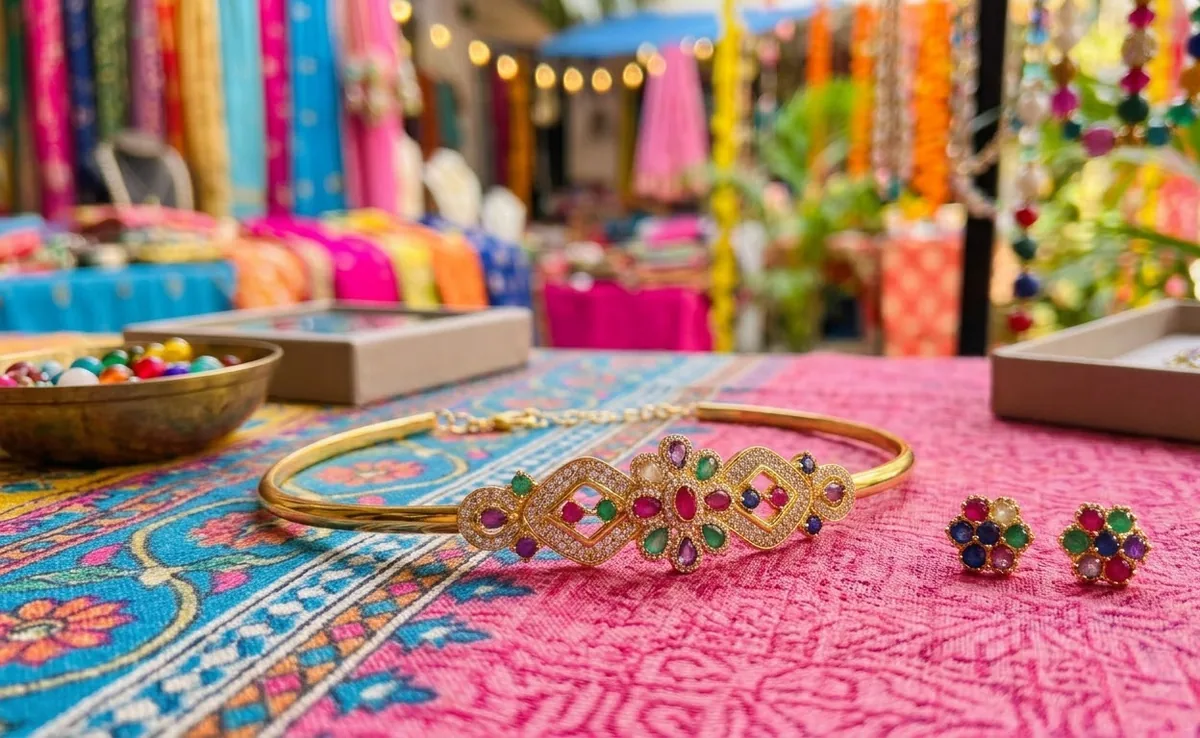
What is the difference between artificial and imitation jewellery?
- Artificial jewellery - the everyday Indian word: anything that is not "real" gold, silver or diamond. It is the most searched of the three.
- Imitation jewellery - the trade word for pieces made to copy traditional gold designs: temple, Kundan, antique, bridal. It stresses the look it imitates.
- Fashion jewellery - a wider word that also covers western, trendy and seasonal designs that copy nothing traditional.
- Costume jewellery - the older English term for jewellery worn to complete an outfit (a "costume") rather than for its metal value; today it means the same as fashion jewellery.
So every imitation piece is artificial jewellery, but not every fashion piece is an imitation of a gold design.
What is artificial jewellery made of?
Every listing should tell you three things:
- Base metal - Zamak (zinc alloy), brass, copper or other alloys. The base decides the weight, the sharpness of the detail and how the piece wears.
- Finish - gold-plated, antique gold-plated, gold-tone, rose-gold or oxidised.
- Stones - Kundan-style glass, crystal, cubic zirconia (called AD or American diamond), synthetic pearls and enamel.
Every piece we sell is a Zamak base, antique gold-plated, with hand-set stones.
Types of artificial jewellery
- Temple jewellery - goddess and peacock motifs from South India. See temple jewellery sets.
- Kundan jewellery - glass stones set in gold-tone foil frames. See Kundan earrings.
- Antique jewellery - a darkened gold finish that looks old.
- AD / American diamond jewellery - cubic zirconia in silver or gold tone.
- Oxidised jewellery - blackened silver-tone, for casual and fusion wear.
- Pearl and bead jewellery.
- One gram gold - a heavier gold coating, marketed as closer to real gold. Read gold-plated vs one gram gold.
Which artificial jewellery material is best?
There is no single best. It depends on what you want:
- Detailed traditional designs need a base that casts sharply, such as Zamak or brass.
- Everyday wear needs a durable finish and light weight.
- Sensitive skin - some people react to certain metals. Wear a new piece for a short time first.
Is artificial jewellery allowed in flight?
Yes. Jewellery is not a restricted item in cabin or check-in baggage on Indian and international flights. Keep it in your cabin bag so it is not lost or crushed, and wrap each piece separately. Read packing jewellery for a trip.
Where is artificial jewellery made in India?
Artificial jewellery is made all over India, but a few centres are known for particular styles:
- Mumbai - one of the largest centres for cast, gold-plated imitation jewellery, with wholesale markets that supply shops across the country.
- Rajkot (Gujarat) - known for imitation jewellery, including one gram gold.
- Jaipur (Rajasthan) - Kundan, meenakari and Polki-style jewellery.
- Hyderabad - pearl and traditional Hyderabadi styles.
- Machilipatnam (Andhra Pradesh) - known for one gram gold and imitation jewellery (it does not hold a GI tag).
- Delhi - big wholesale and retail markets for bridal artificial jewellery.
Our pieces are made in India.
How to choose good artificial jewellery
Whatever word the listing uses, check the same things:
- The material in writing - base metal, finish and stones. A seller who cannot tell you is a warning sign.
- Close-up photos - sharp detail, even colour and neat stone settings.
- The back of the piece - finished and plated, not raw metal.
- Weight and size - given in the listing, so you know what arrives.
- The seller - business name, GST invoice, written return policy.
Read what you are actually paying for and spotting bad plating from a product photo.
Artificial jewellery by occasion
- Wedding and bridal: temple, Kundan and antique sets. See temple jewellery sets.
- Festivals: jhumkas, coin necklaces, chokers.
- Parties and receptions: crystal and AD jewellery. See crystal necklace sets.
- Office and daily wear: light pendants and small studs.
Frequently asked questions
Is artificial jewellery the same as imitation jewellery?
In everyday use in India, yes. Both mean jewellery that is not solid gold or silver.
What is artificial jewellery called in English?
Fashion jewellery or costume jewellery. "Imitation jewellery" is also used, mainly in India.
What does AD mean in artificial jewellery?
American diamond: cubic zirconia stones that look like diamonds.
Browse artificial jewellery.