Real vs Fake: How to Identify Genuine Gold-Plated Jewellery
Not all gold-plated jewellery is created equal. A well-made high gold-plated necklace can last years, while a cheap spray-coated piece might fade in weeks. Here are five practical tests any buyer can do - no jeweller required.

1. Magnet Test
Genuine gold-plated jewellery uses a Zamak or brass base - neither is magnetic. If a fridge magnet sticks to your necklace, the base metal contains iron. That is a sure sign of inferior quality. All Saubhagya pieces use a Zamak alloy base, which will not attract a magnet.
2. Check What the Seller Says the Base Is
Imitation jewellery sits outside BIS hallmarking altogether - that scheme covers precious metal - so a missing stamp tells you nothing, and a stamp on a plated piece is not a hallmark either. What actually separates a good piece from a bad one is whether the seller will name the base metal at all. "Alloy" on its own is a hiding place; Zamak, brass or steel is an answer. If nobody will tell you what is under the gold, that is your signal.
3. Weight Test
Weight tells you about the casting, not the plating - gold plating is microns thick and adds almost nothing. What you are feeling for is density and finish: a well-cast piece feels dense and even for its size, with crisp detail and no rough seams, while a poor one feels papery and flexes when you press it. Light is not the same as cheap. A hollow-cast light-weight earring is deliberate, so it can be worn through a full function; a piece that bends under thumb pressure is not.
4. Price Check
A gold-plated necklace cast from proper alloy cannot cost ₹99. If the price seems too good to be true, the plating is likely a single wash that will rub off on your skin. Genuine high gold-plated jewellery starts around ₹200-250 for earrings and ₹400-500 for necklaces.
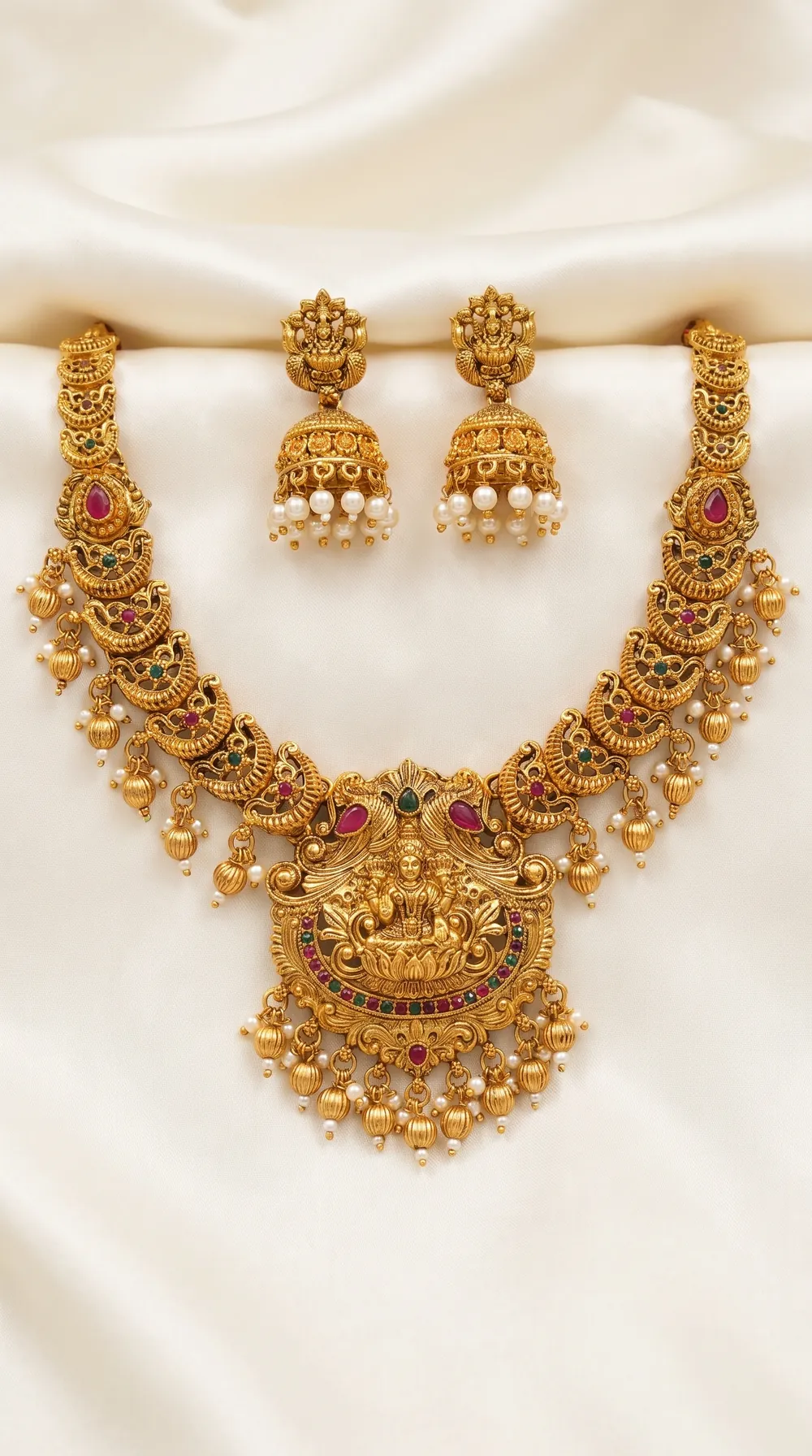
5. Scratch Patch Test
On the back of the pendant - where no one will see - lightly scratch with a coin. If a silver or grey base shows through immediately, the plating is paper-thin. Quality pieces have enough microns to resist light scratches.
At Saubhagya, every piece is high gold-plated on a Zamak base and inspected before it is dispatched. Browse our collections or WhatsApp us with questions.
How can you tell if jewellery is real gold or gold-plated?
Check for a hallmark first. In India, gold jewellery sold as gold must carry a BIS hallmark: the BIS logo, the purity grade (such as 22K916) and a six-digit HUID code. Gold-plated and imitation jewellery carries none of these. If a piece is sold as gold with no hallmark, ask why before buying.
The HUID is the useful part: every hallmarked piece has its own six-digit code, and it can be verified in the government's BIS CARE app. A piece that claims to be gold but whose code does not verify is not what it says.
Does a magnet test prove jewellery is fake?
It proves something, but less than people assume. Gold is not magnetic, so a piece that snaps to a magnet is not solid gold. But plenty of plated jewellery is made on brass or other non-magnetic alloys and will not react either. A magnet can rule gold out; it cannot rule it in.
Is gold-plated jewellery the same as imitation jewellery?
Not exactly. Gold-plated means a base metal carrying a thin layer of real gold on the surface. Imitation or artificial jewellery is the broader category — some of it gold-plated, some gold-toned with no gold at all. The honest word depends on whether real gold is in the finish.
How long does gold plating last?
With care, many years of occasional wear; with daily wear against skin, far less. Plating wears where it rubs — clasps, ring bands, the inner edge of bangles — long before the decorative surfaces. Keeping perfume and water off it, and storing each piece separately, does more for its life than anything else.
Shop this look
Keep reading
- Gold-plated vs one gram gold: what you are buying
- Matte or glossy gold: which finish to choose
- Storing jewellery through an Indian monsoon
- Care tips that keep imitation jewellery looking new
- Caring for matte antique-gold finishes