How to Store Artificial Jewellery: Home and Monsoon Care
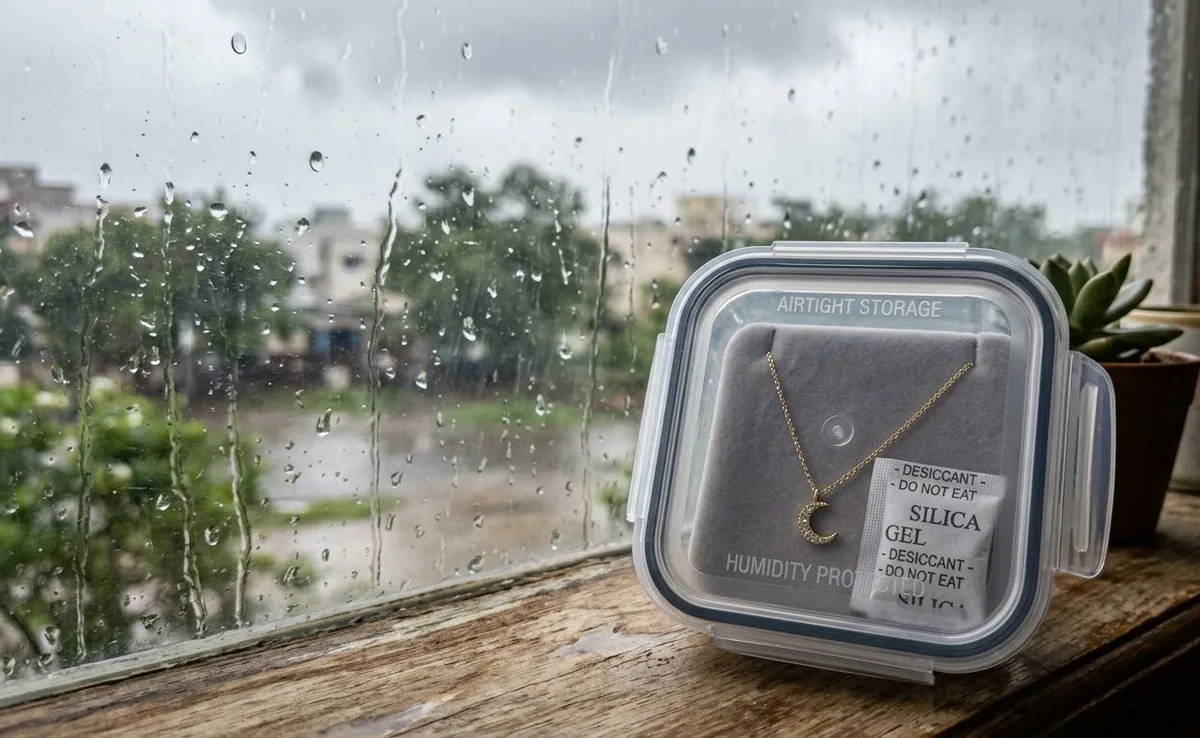
Most imitation jewellery that "goes bad" in a cupboard is not damaged by dust - it is damaged by air, humidity and other pieces rubbing against it. Storing each piece dry, sealed and separate is the single biggest thing you can do to keep it looking new. The Indian monsoon makes all of this harder: not because of the rain you walk through, but because of the humidity that sits in the air for months.
Air is the enemy, not dust
Humid air carries moisture that dulls plating and tarnishes the foil behind Kundan stones. Air also carries sulphur compounds that darken metal. A piece left in an open tray darkens faster than one in a sealed pouch.
How to store artificial jewellery at home
- Wipe first. Before storing, wipe every piece with a dry soft cloth to remove sweat and skin oil.
- One piece, one pouch. A small zip-lock bag or soft pouch per necklace or pair of earrings, or wrap it in tissue.
- Squeeze out the air before sealing.
- Silica gel sachets - the ones that come in shoe boxes - in the storage box absorb moisture. Replace or dry them out every few months.
- A closed box, kept in a cool, dry cupboard - not the bathroom or the kitchen.
Best way to store Indian artificial jewellery
- Necklace sets: in their original boxes, flat.
- Jhumkas: in pairs, in small pouches, so hangings do not tangle.
- Bangles: on a bangle stand or in a bangle box.
- Chokers: flat, with the dori untangled.
- Maang tikkas and nethi chuttis: in small boxes so chains do not knot.
What never to store together
- Stone-set pieces with plain metal - stones scratch plating.
- Pearls with sharp stone pieces - the stones scratch the pearls.
- Oxidised with gold-tone pieces - they can transfer marks.
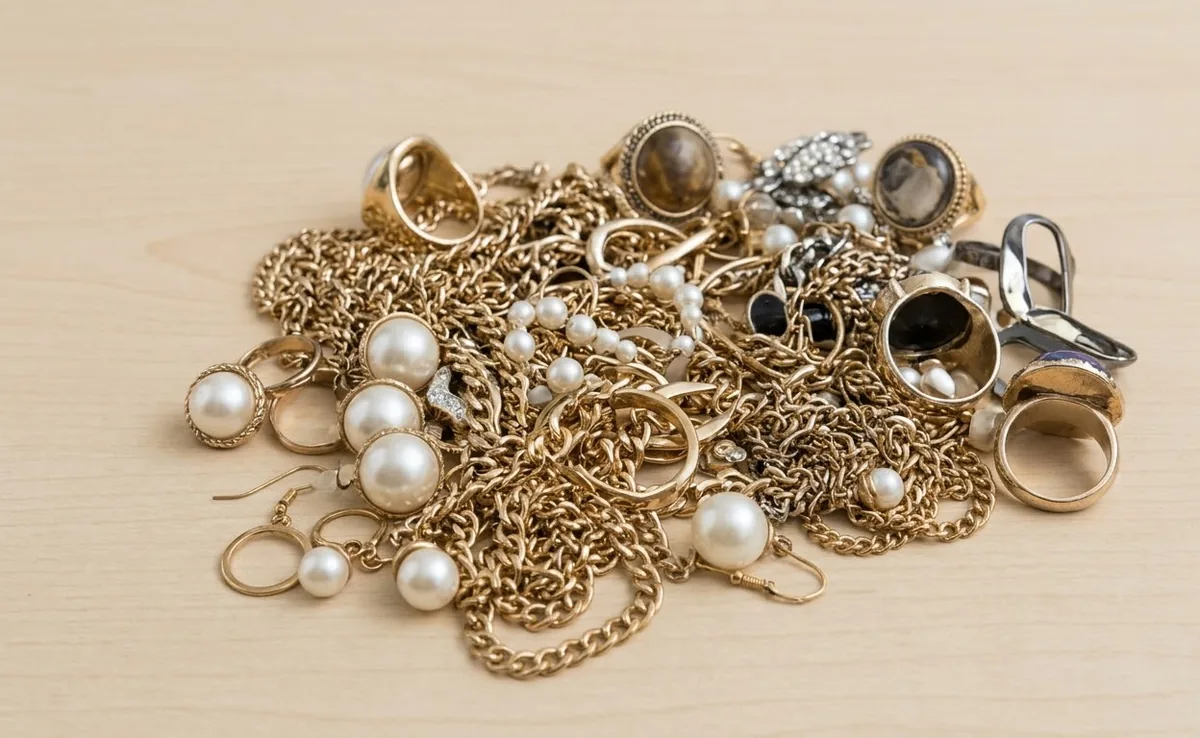
- Necklaces in a heap - chains tangle and bead drops break. Lay necklaces flat.
- Wet or sweaty jewellery with anything - dry it first.
- Imitation with real silver - silver tarnish can transfer.
What to keep out of the box
- Cotton wool. It catches on stones and holds moisture against the metal.
- Rubber bands and PVC. Both release sulphur compounds over time that attack plating.
- Newspaper. Ink transfers, and paper holds damp.
- The other set you wore last night, until it has been wiped and aired.
Jewellery organisers
- Compartment boxes - good for earrings and rings.
- Hanging organisers - good for light chains; not for heavy necklaces.
- Bangle boxes - protect bangles from knocks.
- Travel rolls - for trips. Read travelling with jewellery.
In a small home or hostel, a single compartment box with a lid, plus pouches for bigger sets, is enough. Keep it on a high shelf, away from the bathroom and the kitchen.
Labelling boxes
If you own many sets, label each box by function or colour - "red temple set", "pastel Kundan" - so you can find the right one without opening every box. It also reduces handling, which protects the pieces. Keep a small list inside the lid of what each box holds, and add the date you last checked it.
Why monsoon humidity is worse than rain
A few drops of rain on a necklace, wiped off, do little harm. What does harm is constant damp air: moisture settles on metal day after day, gets behind stones, and works on plating even when the jewellery is not being worn. In humid coastal cities like Mumbai, Chennai, Kochi and Kolkata this lasts much of the year, so keep silica gel in your jewellery boxes all year round.
Monsoon storage setup
- An airtight plastic box or zip bag for each group of pieces.
- Individual soft pouches inside.
- Silica gel sachets in each box, replaced every few weeks in the wettest months.
- Store in a dry cupboard away from walls that get damp.
- Check every few weeks for dampness or tarnish.
Many silica gel sachets can be dried and reused, and some change colour when saturated. Follow the instructions on the pack, since methods differ.
What to keep in the cupboard until October
- Bridal and heavy sets - sealed in zip bags with silica gel, in a closed box.
- Kundan pieces - especially sensitive to moisture.
- Pearls - keep them dry and separate.
For daily wear during the monsoon, choose a few pieces and wipe them after each wear. Oxidised jewellery hides moisture marks well; small studs, a light pendant and one bangle are enough for office or college. Keep festive pieces at home until the weather is dry, and if you must wear them for a function, carry a small pouch and a dry cloth in your bag.
If a piece gets wet
- Pat it dry at once with a soft cloth.
- Leave it on a dry towel in a well-ventilated room, ideally overnight.
- Never use a hair dryer close up - heat can loosen adhesive-set stones.
- Check the stones and settings the next day.
- Store only when completely dry - a damp piece sealed in a bag is worse than one left out.
Early signs of monsoon damage
- Cloudy Kundan stones.
- Dark spots on plating.
- A musty smell in the jewellery box.
Act as soon as you see them: dry the pieces and replace the silica gel.
Storing jewellery for years
For pieces you wear only at weddings, store them in their boxes inside a larger airtight container with silica gel, and check them twice a year. Wear pieces occasionally - jewellery left untouched in humid conditions can tarnish unseen.
At the start of every monsoon, take everything out. Replace the silica. Check each piece for a scratch or a dull patch at an edge - that is where failure starts, and a piece showing it should be worn more carefully rather than stored next to the others. Air the box itself for a few hours before anything goes back.
Bridal sets, which sit longest
A wedding set is the most expensive thing in the box and the least often opened, which makes it the most at risk. Store it in its own pouch, in its own compartment, with its own silica sachet, and open it once a year even if there is no occasion. A set that has been sealed away untouched for three monsoons is the one that surprises people.
What this does not fix
Storage protects plating; it does not restore it. Once the layer has worn through at a contact point, that is permanent. What good storage buys you is years instead of seasons - which, on occasion jewellery, is the whole difference.
If a piece arrives with a manufacturing defect rather than a wear problem, that is a separate matter and it is covered: reported within 3 days of delivery, it is repaired or replaced free, return pickup included. The full terms are on shipping and returns.
For cleaning, see cleaning imitation jewellery at home, and for what causes dark patches, what tarnishes gold-plated jewellery.
Shop this look
- Peacock Yoke Lakshmi bead long haram set - bead harams need the most careful storage of anything here, because the strings hold damp.
- Antique gold South Indian jhumka, scrollwork top - matte antique gold, which hides handling better than a polished finish.
Browse temple jewellery sets or everything.
Hinglish mein padhein: Artificial jewellery kaise rakhe.
Frequently asked questions
Should jewellery be stored in plastic?
Yes - a sealed plastic zip bag is one of the best ways, because it keeps out air and humidity. Add a silica gel sachet.
Does cotton wool damage plating?
Cotton wool can catch on stones and hold moisture. A smooth pouch or tissue is better.
Can I wear gold plated jewellery in the rain?
Yes, occasionally - just dry it thoroughly afterwards before storing it.
How do I dry jewellery that got wet?
Pat it dry with a soft cloth, leave it on a dry towel to air, and store it only when completely dry.