Cleaning Imitation Jewellery at Home Without Ruining It
Cleaning imitation jewellery is mostly about what not to do. Gold plating is a thin layer, and many stones are set with adhesive, so water, chemicals and scrubbing do more harm than dirt. The safe method is dry and gentle.
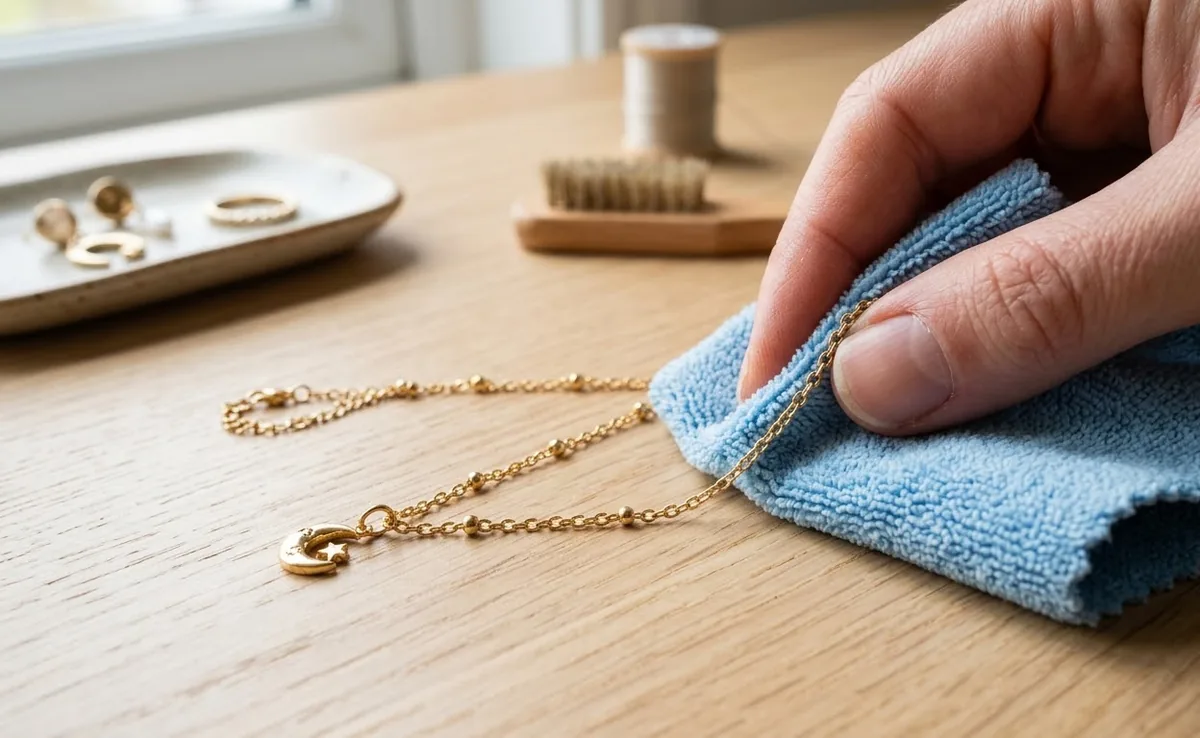
The dry method that is always safe
- A soft, dry microfibre or cotton cloth - wipe the piece gently after every wear.
- A soft, dry brush (a clean makeup or baby toothbrush) for dust in carving and around stones.
- Let it air for a few minutes after wearing, so sweat evaporates, then wipe and store.
That is enough for almost all imitation jewellery, almost all the time.
When a damp cloth is acceptable
For plain metal pieces with no stones - a simple chain or plain bangle - with visible grime:
- Dampen a cloth very lightly with plain water.
- Wipe once, then immediately dry thoroughly with a dry cloth.
- Never soak, and never let water reach stones, Kundan foil or pearls.
For Kundan, see how to keep Kundan from going dull.
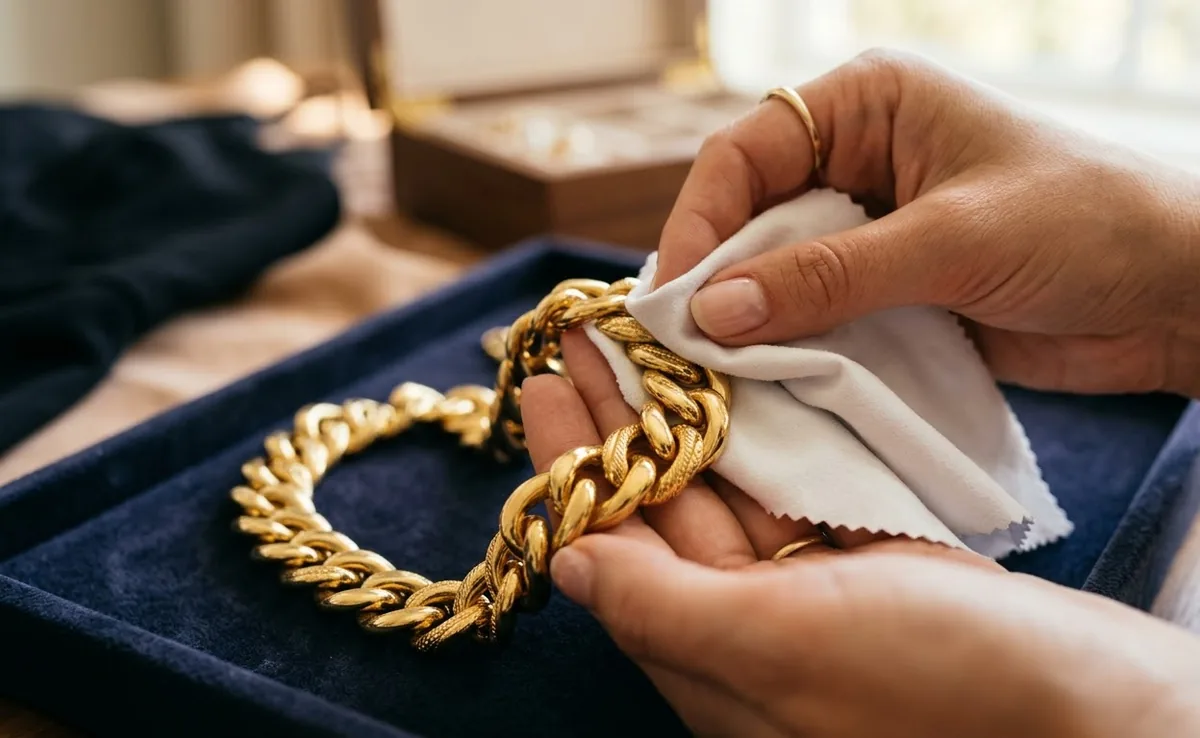
Five things to never put on plated metal
- Toothpaste - it is abrasive and scratches plating off.
- Silver dip or jewellery cleaning liquids - made for solid metals, they strip plating.
- Soap soaks - water gets behind stones and loosens adhesive.
- Lemon, vinegar or baking soda - acidic or abrasive; common "home remedies" that damage plating.
- Ultrasonic cleaners - they loosen glued stones.
Read our earlier how to clean imitation jewellery and storing imitation jewellery.
How to clean artificial jewellery at home, step by step
- Lay the piece on a soft towel so nothing falls or scratches.
- Wipe the whole piece with a dry microfibre cloth, following the design, not scrubbing across it.
- Use a soft, dry make-up brush or baby toothbrush to lift dust from recesses, jhumka domes and around stones.
- For sticky grime only, dampen a corner of the cloth very slightly, wipe, then dry at once with a dry part of the cloth.
- Air-dry for 30 minutes before storing.
Can I clean artificial jewellery with toothpaste?
No. Toothpaste is abrasive: it scratches plating and dulls stones. The same goes for baking soda, lemon, vinegar and salt - popular "hacks" that remove plating along with the dirt.
How to clean old artificial jewellery
Old pieces often have dust packed into the design and darkened plating. Brush the dust out gently with a soft dry brush, then wipe with a dry cloth. If the plating has worn through, cleaning will not bring back the gold colour - that needs replating. Read when to replate.
Cleaning by type
- Kundan: dry only - moisture behind the stones clouds the foil. Read Kundan care guide.
- Pearls: dry cloth only; never soak.
- Oxidised: dry cloth; do not polish, or you remove the dark finish.
- AD / crystal: dry cloth to restore sparkle.
- Antique gold: dry cloth; never use a polishing cloth.
Artificial jewellery cleaning solutions
Most jewellery cleaning liquids are designed for gold, silver or diamonds and are too strong for plated jewellery. For artificial jewellery, a dry cloth and a soft brush are the safest cleaners.
How often to clean
Wipe after every wear. A gentle brush-clean every few months is enough for pieces you wear often.
How to polish artificial jewellery at home
For plated jewellery, "polishing" should mean buffing gently with a dry microfibre cloth - nothing more. Polishing pastes and silver cloths are too abrasive and remove plating. Antique and oxidised finishes should not be polished at all.
Cleaning jewellery after a wedding
Wedding jewellery collects make-up, sindoor, sweat and perfume in one day. The same night, wipe each piece, brush out the recesses and let everything air-dry before packing.
Tools to keep ready
A microfibre cloth, a soft brush and a few silica gel sachets are all you need.
Prevention is the actual answer
Cleaning is damage control. What decides how a plated piece looks in three years is what it touches:
- Jewellery goes on last - after perfume, hairspray, lotion - and comes off first.
- Never worn in water, while exercising, or while sleeping.
- Each piece stored in its own pouch, away from damp, never loose against another piece.
Storing jewellery through an Indian monsoon covers the storage side properly, and why jewellery leaves a green mark explains what is happening chemically when it does.
What we do not claim
Every gold-plated item from every maker eventually shows wear at its contact points, and a shop telling you otherwise is promising something it does not control. What we will tell you is what a piece is made of and how the barrier works.
Shop this look
More in care tips for imitation jewellery and the jewellery care guide.
Worth knowing
Everything here is antique gold-plated Zamak with hand-set kemp and kundan stones, hand-finished, made in India. It is imitation jewellery, not solid gold, and the product page says so. Free shipping across India, GST in the price, and damage or a manufacturing defect reported within 3 days of delivery is repaired or replaced free, return pickup included.
Hinglish mein padhein: Artificial jewellery kaise saaf kare.
Frequently asked questions
Can I clean imitation jewellery with toothpaste?
No - toothpaste is abrasive and wears the plating away.
Is soap water safe for gold plated jewellery?
Not for soaking. A barely damp cloth on plain metal, dried immediately, is the most water it should see.