Bengali bride jewellery: champakali, tikli and the right jhumka
A Bengali bride wears tradition in two layers. The first is the shakha and pola - the white and red bangles given by her parents - which stay on through the ceremony. The second is the bridal set: a champakali or chik necklace that hugs the throat, a tikli at the hair parting, and long jhumkas that echo the chik design.

For brides outside Bengal who want the look, the shape matters more than the origin. A champakali-style necklace is built from small dome-shaped petals in gold tone, and it sits beautifully over a red or white Banarasi border. The tikli replaces the traditional maang tikka, resting flat on the forehead instead of hanging.
Choosing the earrings
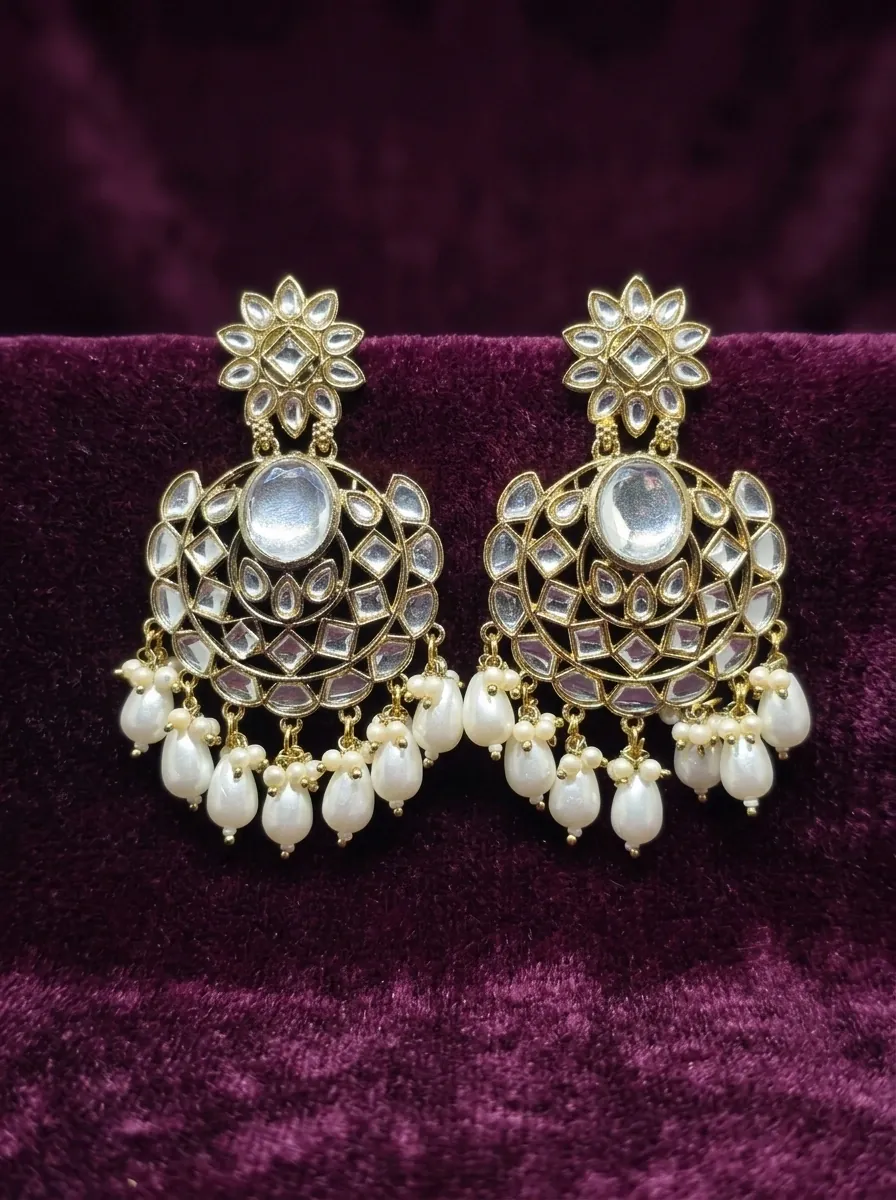
Bengali jhumkas are traditionally long, brushing the collarbone, so they show when the pallu is pinned. If the necklace is busy, pick a simpler jhumka; if the neck is bare, let the earrings carry the look. Our gold-plated jhumka earrings come in sizes that work for both sangeet and the main ceremony.
Keeping it light for saat paake
The saat paake ends the night, so the jewellery should already be comfortable. Two-piece sets - necklace plus jhumkas - cover the whole ceremony without the weight of a full haaram. Every Saubhagya piece is gold-plated over a light base, designed to stay on from morning till the final pheras.
Explore our necklace and earring collections for Bengali bridal styling, or WhatsApp us your saree border colour for a match.
What jewellery does a Bengali bride wear?
The core pieces are the shakha and pola — white conch and red coral bangles — alongside a gold loha bangle, a tikli or mukut at the forehead, a sitahaar or champakali necklace, long jhumkas and a nath. The shakha, pola and loha mark marriage and are worn long after the wedding.

What is a champakali necklace?
A champakali is a necklace built from rows of small, pointed, bud-shaped pieces named after the champa flower. Each petal is lightweight on its own, so the necklace can be wide without being heavy — one reason it stays comfortable through a long ceremony. It sits close around the neck rather than hanging.
What is a tikli?
A tikli is the Bengali forehead ornament, worn at the parting and often sitting just above the eyebrows, sometimes with a chain running back into the hair. It is more delicate than a North Indian maang tikka and usually paired with the bride's sindoor and the red and white of the saree.
What is a sitahaar?
A sitahaar is a long, layered necklace that falls well below the collarbone, worn below a choker or champakali so the two sit at different heights. Layering them is what gives the Bengali bridal neckline its fullness without one single, heavy piece.
What colour jewellery suits a red and white Bengali saree?
Warm, yellow gold rather than rose or antique tones. The traditional Bengali bridal saree is red with a white or gold border, and a bright yellow-gold finish echoes the border and the shakha-pola together. Antique and matte finishes can look muddy against that much red.
Shop this look
Keep reading
- Which jewellery suits each saree neckline
- Choker, collar or haram: the length guide
- Maharashtrian nath, kolhapuri saaj and tanmani
- The Indian bridal jewellery guide
- South Indian temple jewellery: jhumkas, kasulaperu and kemp