What Is Temple Jewellery and Why Is It So Popular?
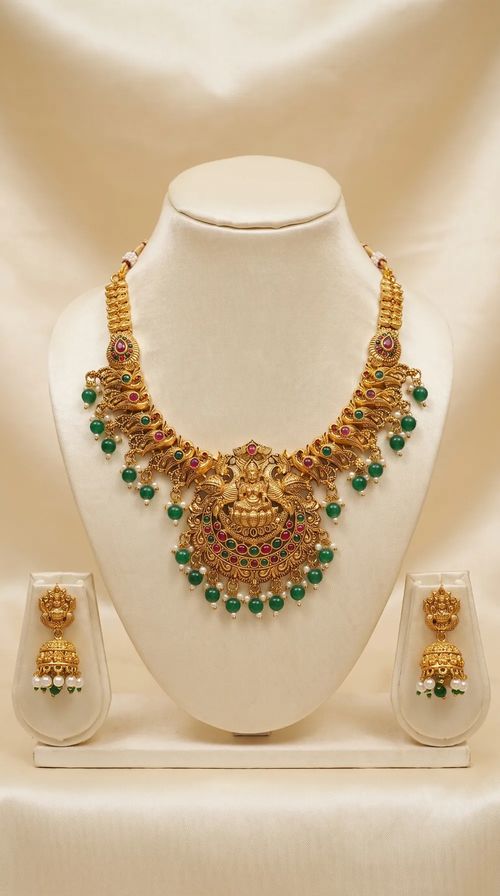
Temple jewellery is the heavy, deity-carved jewellery of South India: Lakshmi, peacocks, lotuses and mango motifs worked in gold, usually finished with red kemp stones and pearl or bead drops. It began as ornament for the idols in South Indian temples, travelled to classical dancers and then to brides, and today it is one of the most recognisable styles in Indian fashion - worn far beyond the region it came from.
What is temple jewellery?
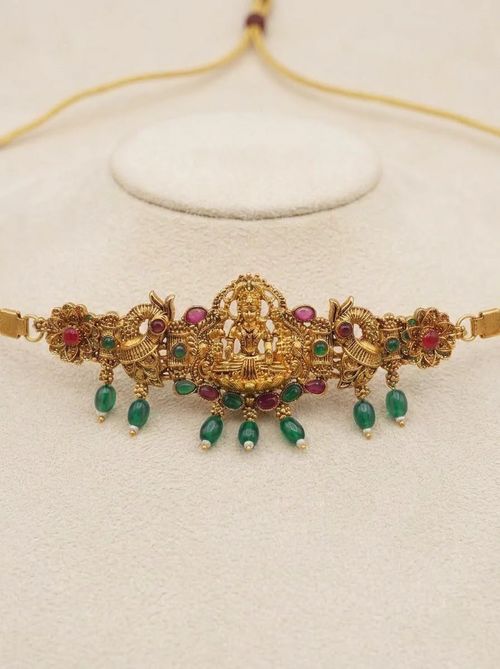
Temple jewellery is a style defined by what it shows rather than what it is made of. The pieces carry images from temple architecture and Hindu iconography: the goddess Lakshmi seated on a lotus, pairs of peacocks, the mango (manga) shape, coins, rows of small bells and the arch of a temple gateway. The finish is usually a warm, slightly matte antique gold rather than a mirror shine, which is what gives the carving its depth.
The classic pieces are the ones a South Indian bride wears together: a short choker or addigai at the neck, a long haram falling below it, jhumkas, a vanki armlet on the upper arm and an oddiyanam waist belt. Any one of them on its own is still temple jewellery.
Where does temple jewellery come from?
The name is literal. For centuries, South Indian temples commissioned gold ornaments to adorn their deities, and the goldsmiths who made them carved the same gods, animals and flowers that decorate the temple walls. Classical dancers, who performed in and around the temples, wore versions of the same pieces on stage, and Bharatanatyam and Kuchipudi costumes still use them today. From the stage it moved to weddings, where it is now the standard bridal jewellery across Tamil Nadu, Kerala, Karnataka, Andhra Pradesh and Telangana.
Nagercoil in Kanyakumari district is the town most associated with the craft. The work is centred on Vadasery, a neighbourhood of Nagercoil, where goldsmiths traditionally set gold with red and green stones (known locally as kuchu kal), and "Temple Jewellery of Nagercoil" was registered as a Geographical Indication in 2007-08 - so only pieces made there, the traditional way, can use that name. Everything sold elsewhere, including ours, is temple-style jewellery.
What are the most common temple jewellery motifs?
- Lakshmi - the goddess of prosperity, seated or standing, usually at the centre of a necklace or pendant. The most requested motif by far - see why Lakshmi sits at the centre of temple jewellery.
- Peacock - often in pairs facing each other, a symbol of beauty and grace.
- Mango (manga) - the paisley-like mango shape strung in rows makes the manga malai, a traditional bridal necklace.
- Lotus - purity; it often forms the base Lakshmi sits on.
- Coins (kasu) - rows of coins make the kasulaperu, which we have written about in our guide to South Indian temple jewellery.
Red kemp stones, green beads and pearl drops add the colour. The metal carries the design; the stones and drops frame it.
Why is temple jewellery so popular in Indian fashion?
It reads as festive instantly. A single temple choker turns a plain silk kurta into an outfit for a puja or a family function. There is very little in Indian jewellery that does so much work on its own.
It suits the saree better than almost anything else. The weight and the antique finish sit comfortably against Kanjeevaram and other heavy silks, and the deity motifs echo the temple borders woven into many South Indian sarees. Our guide to styling temple jewellery with sarees and ethnic outfits goes fabric by fabric.
It carries meaning. For many families, Lakshmi at the neck on a wedding day or during Varalakshmi Vratam is not decoration but blessing. That is why the style has lasted while other trends come and go.
It has travelled. South Indian weddings, classical dance, cinema and social media have carried the look to brides and festival shoppers in Mumbai, Delhi and beyond, many of whom have no family connection to it at all - they simply like how it looks with a saree.
It is now within reach. Solid gold temple jewellery is an heirloom purchase. Antique gold-plated pieces give the same look at a price that makes sense for a single festival, a friend's wedding or a dance performance.
Is temple jewellery only for weddings?
No. A full set - choker, haram, jhumkas, vanki and oddiyanam - is bridal. One piece is everyday festive wear. A temple pendant on a bead chain works for office pujas and Diwali; jhumkas work with cotton sarees and even with a plain kurta. We cover everyday ways to wear it in how to style temple jewellery beyond the wedding.
How is imitation temple jewellery made?
Every piece we sell is a Zamak (zinc alloy) base, precision-cast from a detailed design so the carving stays sharp, then antique gold-plated and finished by hand. The stones and pearls are hand-set into the casting. It is imitation jewellery - it looks like gold temple jewellery and is sold as what it is.
Because the finish is plated, care decides how long it looks new: put it on last, after perfume and lotion, and keep each piece in its own pouch. Our care tips for imitation jewellery cover the rest.
How do you choose your first temple jewellery piece?
Start with the occasion. For a wedding you are attending, a temple haar necklace set with matching jhumkas is the one purchase that completes the look. For festivals and pujas, a pendant or a choker is easier to wear and to repeat. For a bride, the choker and a long haram layered together is the classic South Indian pairing.
Then pick the drops by colour. Green bead drops sit well with maroon, mustard and cream silks; pearl drops with pastels and white; gold bead drops go with everything.
Hinglish mein padhein: Temple jewellery kya hoti hai.
Frequently asked questions
Is temple jewellery real gold?
Traditional temple jewellery for deities and heirloom bridal sets is made in gold. The pieces on this site are imitation jewellery: a Zamak base, antique gold-plated, with hand-set stones. They are sold as imitation, never as gold.
Why is it called temple jewellery?
Because it began as ornament for the deities in South Indian temples, and its designs come from temple iconography - gods, peacocks, lotuses and temple arches.
Can North Indian brides wear temple jewellery?
Yes. Plenty of brides outside South India now choose a temple choker or haram for a reception or a sangeet, especially with a silk saree or a lehenga in jewel tones. Our comparison of temple vs Kundan jewellery helps if you are choosing between the two.
Browse the temple jewellery sets and temple chokers to see every piece in stock today.