Odia Bridal Jewellery and the Filigree Tradition
Odia bridal jewellery is best known for tarakasi - the fine silver filigree of Cuttack, where thin wire is twisted and curled into lace-like flowers. A traditional Odia bride also wears gold: a tikka, necklaces, bangles and a waist chain, often with a Sambalpuri or Bomkai silk saree. This guide explains filigree, the bridal pieces that use it, and what to check before buying an imitation version.
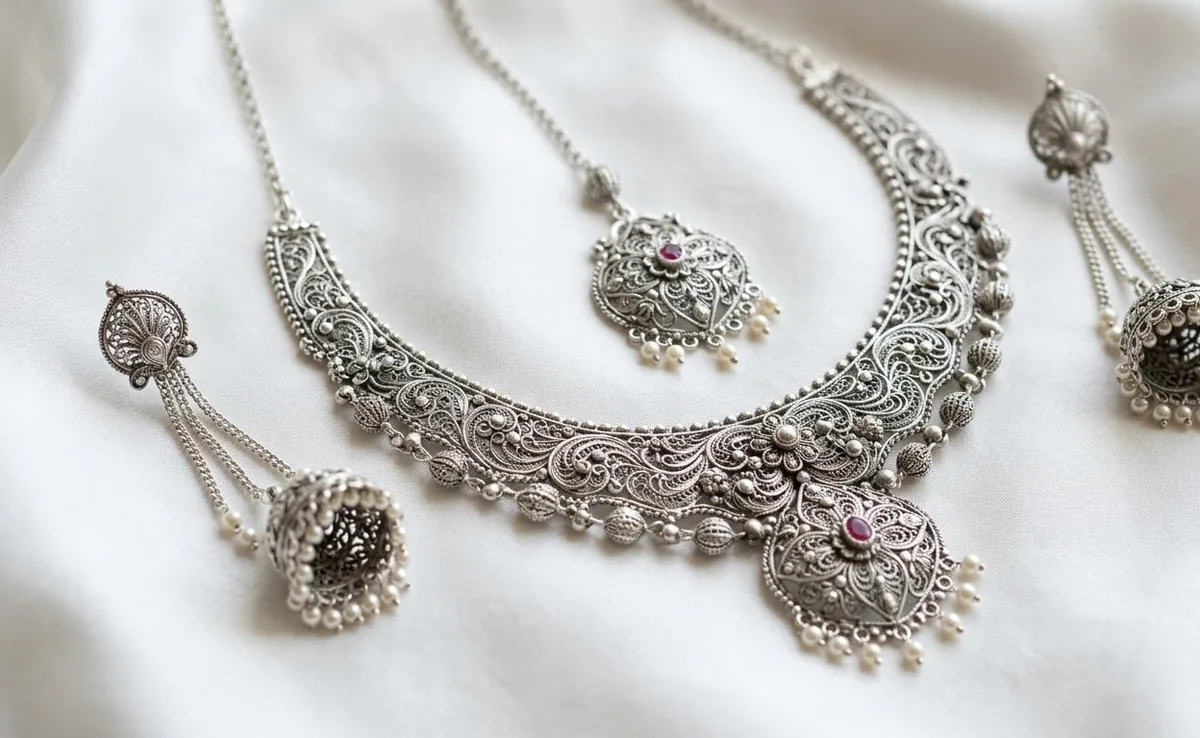
What Cuttacki tarakasi actually is
Tarakasi (from tara, wire, and kasi, design) is filigree: very fine silver wire twisted, flattened and bent into petals and scrolls, then soldered onto a frame. The result is light, open and intricate. Cuttack has been the centre of the craft for about 500 years - the technique is thought to have arrived through sea trade - and in 2024 "Cuttack Rupa Tarakasi" received a Geographical Indication tag. Filigree ornaments are also made for temple festivals in Odisha.
The bridal pieces that carry it
- Tikka and forehead ornaments in filigree or gold.
- Necklaces - often a choker plus a longer chain.
- Earrings - filigree jhumkas and floral studs.
- Bangles and armlets.
- Hair ornaments - filigree flowers pinned into the bun.
Many Odia brides mix silver filigree ornaments with gold jewellery, especially for the reception.
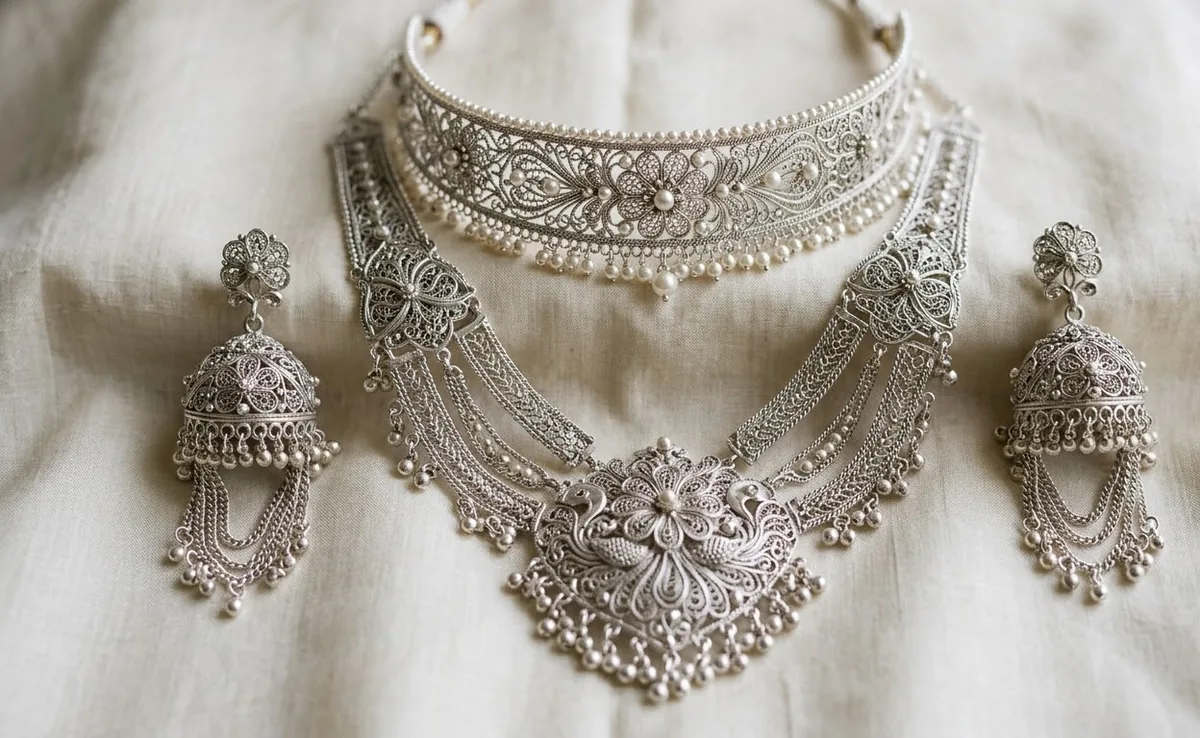
Imitation versions: what to check before buying
Filigree is easy to fake badly. Real tarakasi is open wire; a cheap copy is a flat casting with lines stamped on. In photos:
- Look for light through the design. Open filigree lets the background show.
- Check the edges for a clean frame, not a rough cast rim.
- Weight - real filigree is light for its size; a heavy "filigree" piece is a casting.
Gold-plated imitation pieces with filigree-style detail are a practical way to complete the look for the functions around the wedding. For gold-tone pieces in stock, see imitation jewellery. Compare the East Indian bridal look in Bengali bride jewellery and Assamese bridal jewellery.
Odia bridal jewellery names
- Tahia - a crescent-shaped head ornament worn in the bun, typical of Odissi dance and bridal looks.
- Allaka / matha patti - forehead ornament.
- Nakashi - finely worked necklaces.
- Kanapasa - ear ornament covering the ear.
- Baju - armlet.
- Paunji - bracelets.
- Chandrahaar - a long multi-strand necklace.
- Gunchi and mudi - more traditional pieces for hair and fingers.
Odia wedding sarees and jewellery
Odia brides often wear Sambalpuri, Bomkai or Berhampuri silk. These sarees have bold woven patterns, so the jewellery works best in plain antique gold or silver-filigree style with red or green stones, rather than very busy Kundan.
Silver filigree look in artificial jewellery
Cuttack's tarakasi (silver filigree) is famous. Artificial versions recreate the look in silver tone. Check the close-up photos: the wirework should look fine and even, not stamped flat.
Odissi dance jewellery
The Odissi dance look shares many pieces with the bridal look: the tahia, kanapasa, baju and a waist belt, usually in silver or silver tone. Dancers need secure, light pieces that survive practice and stage lights.
Odia bridal look by ceremony
- Mangana (haldi): turmeric paste, so light jewellery or flowers only.
- Barajatri and the wedding: the full bridal set with a silk saree.
- Chauthi: the fourth-day ritual; a lighter traditional set.
- Reception: a lighter set, often in antique gold or crystal.
Buying Odia-style jewellery online
Search for the piece names (tahia, kanapasa, baju) along with "Odia bridal". Check photos for the fine filigree detail, confirm sizes, and plan to pin the tahia firmly into the bun.
Odia jewellery for festivals
After the wedding, pieces like the chandrahaar and kanapasa are worn again for Raja, Durga Puja and family functions. A set that can be split into smaller parts, such as the necklace alone or the earrings alone, gets the most use.
Frequently asked questions
What is tarakasi work?
Silver filigree from Cuttack, Odisha: fine wire twisted and curled into open, lace-like designs.
Can filigree jewellery be worn every day?
Small filigree studs and pendants can; large open pieces catch on fabric and are better kept for occasions.
Is filigree always silver?
Traditional Cuttack tarakasi is silver. Gold filigree also exists, and imitation versions are usually gold-plated.